Introduction
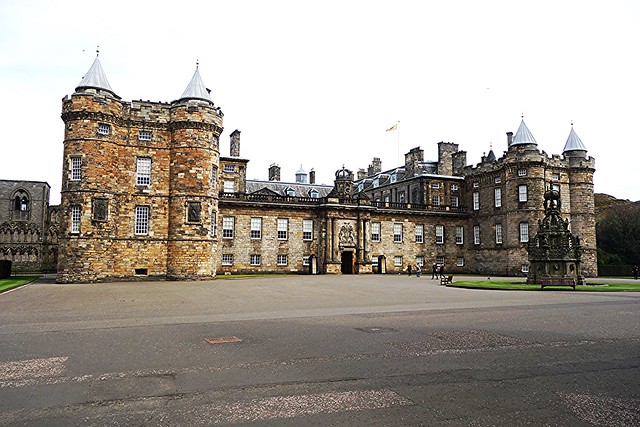
Today, I am reporting on Scotland’s Royal Palace, namely Holyroodhouse at foot of the Royal Mile at Edinburgh. The Palace is located opposite the Scottish Parliament and close to Holyrood Park.
History and architecture
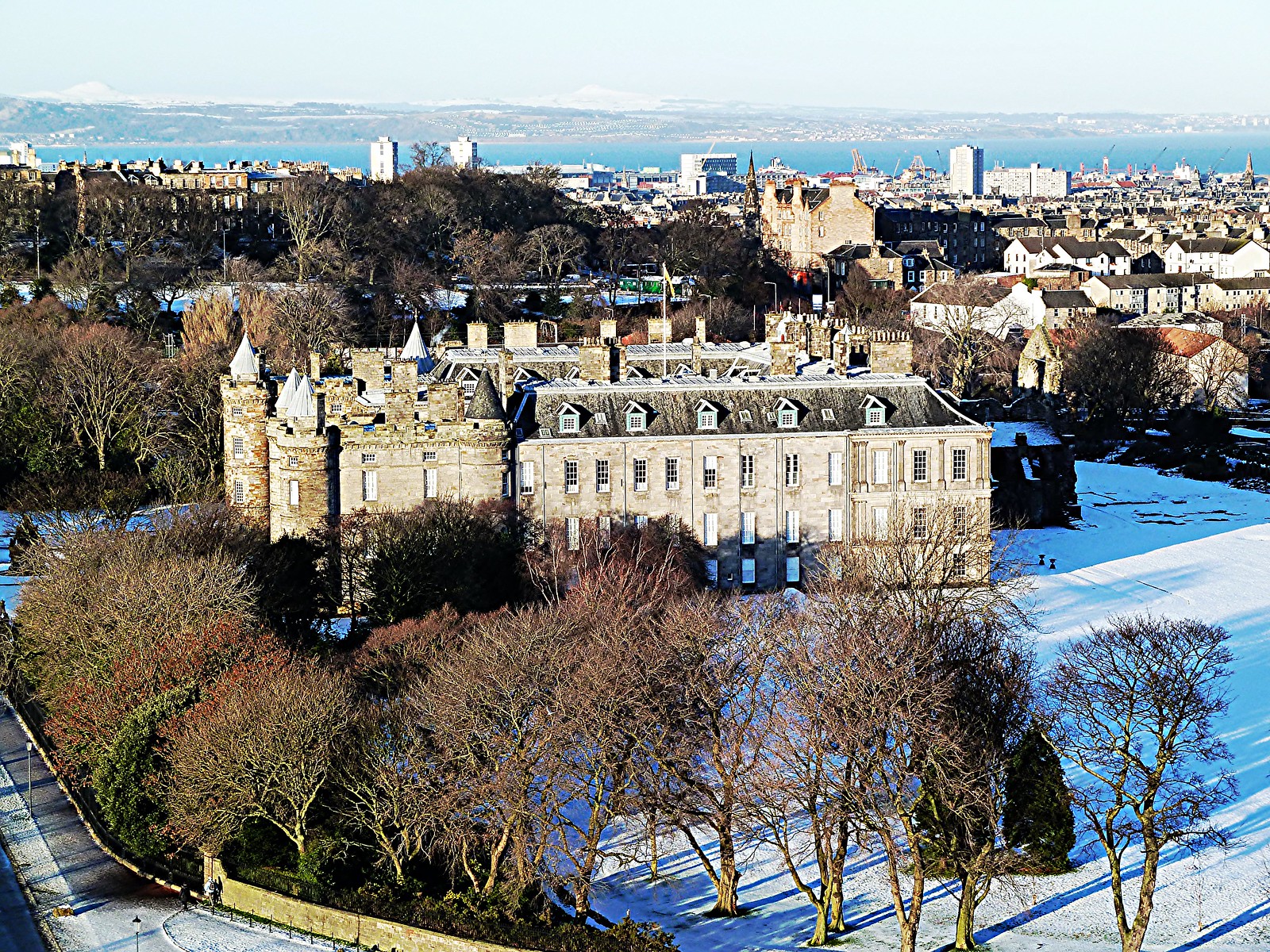
This official Scottish Royal residence has a long history dating back to the 12th century when an Augustinian abbey was founded on the site under the patronage of King David I.
The term Holyrood has two possible origins, viz:
- King David’s alleged vision of a stag with a cross or ‘rood’ between its antlers.
- A fragment of the True Cross which had been brought to Scotland by David’s mother, Margaret.
The early abbey had a guest house for important visitors out of which progressively evolved into the current palace whilst the abbey ultimately deteriorated into its current, ruinous state.
James IV (1488-1513) and V (1513-42) undertook considerable work on building and developing the Palace. James VI resided there until he moved to London in 1603 after which the importance of the building declined. The current building dates from the late 17th century consequent on a re-build prompted by the restoration of the monarchy under Charles II. Architect was Sir William Bruce, whilst Master Mason, Robert Mylne executed the work.

Other important personages and royalty connected with the Palace include James VII, Mary Queen of Scots, Charles Edward Stuart, Comte d’Artois (French), George IV and Queen Victoria.
Video clip of front elevation.
Visiting the Palace
Tours are available to the public and are undertaken at own pace by audio guide. Key aspects include the Quadrangle, Great Stair and State Apartments with latter incorporating a Great Gallery which features an extensive series of portraits of real and legendary kings of Scotland. Check website for opening times. Photography of the interior is not permitted.

Holyrood Abbey
This was the home of an Augustinian order founded by David I (reigned 1124-53).
The Abbey prospered and when Edinburgh became Scotland’s capital in the 15th century the royal family favoured the Abbey’s location as a residence because of the surrounding parkland and hunting opportunities. James II was born at Holyrood and James III married Margaret of Denmark there.
Eventually, the royal lodgings outgrew the Abbey in size and importance.
The Abbey suffered structural damage during 1544 and 1547 (English armies) and again in 1559 (during the Reformation). In 1768 the roof collapsed during a storm leaving the structure much as it is today.

There are burials of high status individuals inside the Abbey ruins.
Visiting the Abbey
Usually included in the same entrance fee/ticket as the Palace.
More information
For more information on Scotland’s historic buildings, history of the people and touring please refer Visitors’ Guide to Scotland, ISBN 978-1-9161332-0-4