
Introduction
This evening, I am posting information on an iconic example of Scottish industrial history. Subject is the Craigellachie Bridge over the River Spey at Craigellachie in the Scottish Highlands.
Craigellachie falls within the Speyside whisky region. The village is home to Craigellachie Distillery the spirit from which is a constituent of the White Horse blend.
Location is about fifty-seven miles N.W. of Aberdeen.

Summary facts and information
- Designed by Scottish born engineer, Thomas Telford (1757-1834). Telford had a prodigious work output which included the Caledonian Canal plus numerous churches and other bridges and an aqueduct.
- A prefabricated, lattice-lozenge arch design of a type developed for deep river sites..The bridge was cast in sections in Wales and then transported to Craigellachie by sea and land. Cost GBP8300.00.
- Spans 150 feet.
- Built 1812-15. Contractors were John Simpson and John Cargill.
- Ranks as oldest surviving cast iron bridge in Scotland.
- Castellated stone abutments support four ribs which form the single arch. The roadway is carried by latticed girders.
- Refurbished in 1963 and closed permanently to motor traffic in 1972 when replaced by a new, reinforced concrete bridge. The Telford bridge remains in good repair and is open for pedestrian and bicycle traffic.
- The bridge featured on a British postage stamp in 2015.
- The bridge is within walking distance of the village of Craigellachie.
- Presented to Moray Council in 2007 on 250th anniversary of Telford’s birth.

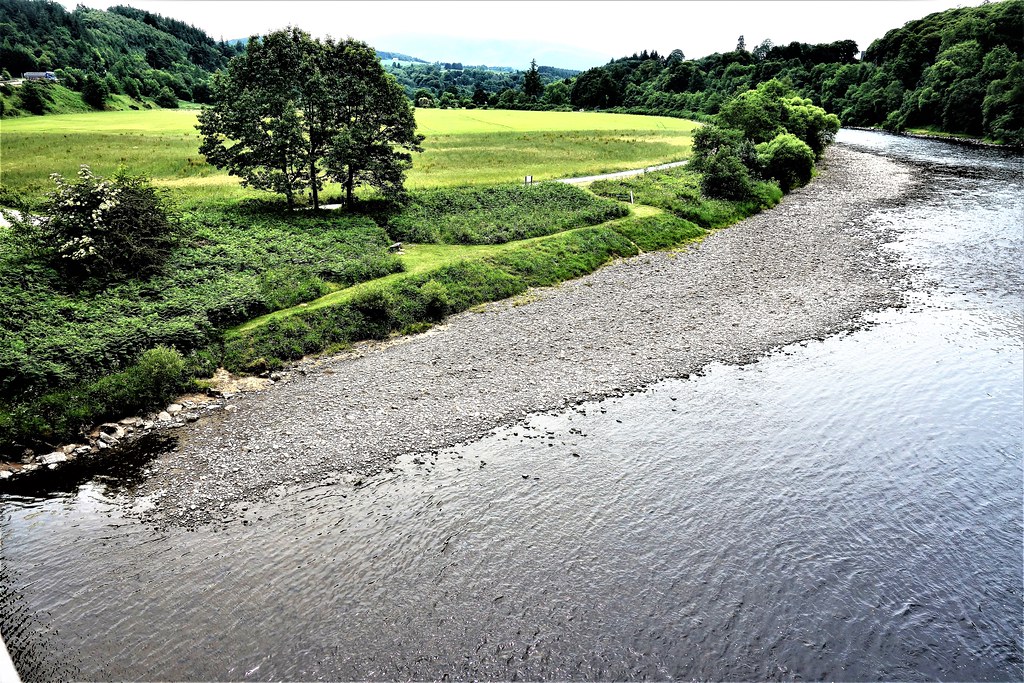
Weather permitting, recreational swimming is possible from the beach under the bridge.

Visiting
The bridge is accessible all year round and is easily reaced from Craigellachie.
More information
For more information on Scotland’s industrial history, the Speyside whisky region and much more please refer Visitors’ Guide to Scotland, ISBN 978-1-9161332-0-4