
Introduction
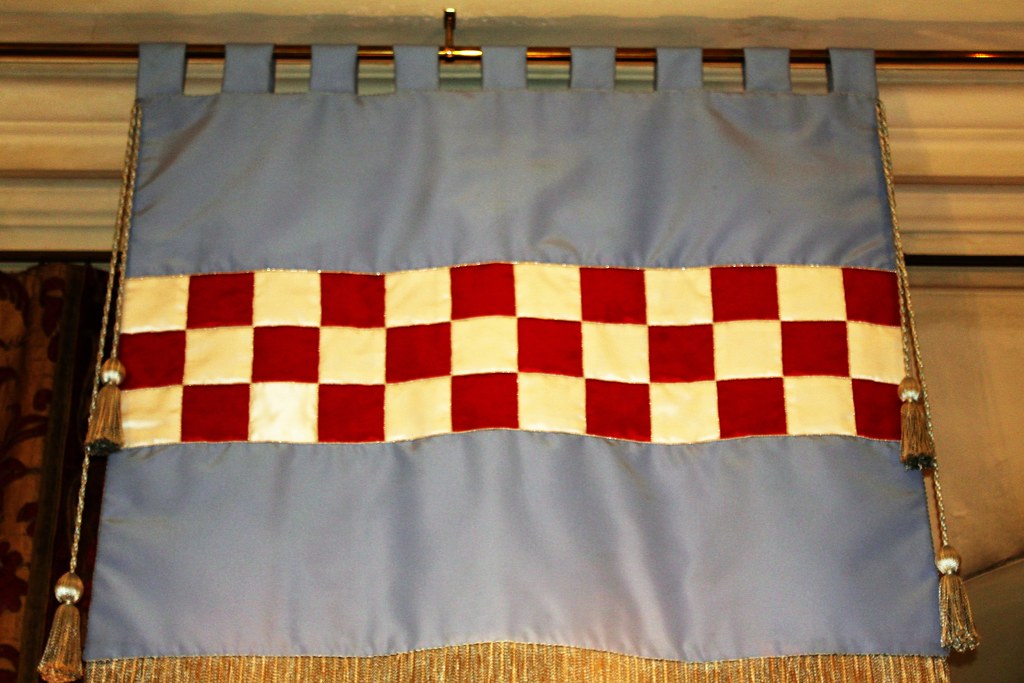
Tonight, I am posting information on Clan Boyd, one of over 100 Scottish clans. This includes a visit to a pertinent battle site where the clan was a protagonist. In Scotland as a whole there may have been about fifty-five battles entailing clan warfare. This illustrates the violent nature of the country during the medieval period, including the driver behind castle building.
The information is set out as a day tour from Glasgow and illustrates the wide number of sites.
Itinerary of Clan Boyd Tour
Site 1- Battle Site of Craignaught Hill
First to Craignaught Hill near Dunlop, about 25 miles S.W. of Glasgow. This is the site known as Battle of Boyd’s Hill where a clan battle was fought on July 9th 1439. Protagonists were Clan Boyd of Kilmarnock and the Stewart family of Darnley. The conflict was result of a feud between the two clans. Outcome was defeat for the Boyds who were outnumbered 2:1.

Craignaught Hill, Ayrshire
Site 2- Village of Dunlop
Next, we paid a brief visit to the village of Dunlop and the local Presbyterian Parish Church where a service was in process. We inspected the old burial ground and found a Boyd memorial.


Site 3- Dean Castle
Next to Dean Castle, near Kilmarnock.
This fortification has a long history. Now, in conjunction with the associated country park, the site is now operated as a visitor attraction
Essentially, the castle builds comprise two parts:
- A stand-alone keep or tower which was built about 1350 by the Boyd family, Lords of Kilmarnock. Emphasis on defence is evidenced by walls some 2-3 metres thick, few windows and just one entrance door. Absence of arrow slits would indicate that defensive fire was concentrated from the roof of the building.
- A small palace with an attached tower built by Robert Boyd about 1460. This features a large number of windows and projecting battlements on the tower. The latter was designed to provide advantage to defenders by facilitating downward fire.
The buildings are in excellent conditions notwithstanding destruction by fire in 1735 and undergoing many changes of ownership. Extensive restoration was undertaken by the 8th Lord Howard de Walden between 1908-1936.This represents a 20th century interpretation of a medieval castle. The castle was presented to the people of Kilmarnock by the son of the 8th Lord in 1975. Entrance is free and guided tours are available.
Our visit coincided with various family orientated events. These included a scarecrow competition, falconry, craft demonstration, archery and activities with pet dogs.


Site 4- Ardrossan
We called at this port and marina to avail of lunch at Cechini’s Restaurant.

Site 5-Portencross Castle

Final visit of the day was Portencross Castle, Ayrshire. This is situated on the coast, thirty-four miles S.W. of Glasgow facing the Firth of Clyde
Portencross was recently restored at cost of GBP1,0m under aegis of the Friends of Portencross Castle.
Brief history of the site and castle:
- The site had been inhabited for thousands of years, with definite evidence of Iron Age (800BC to 100BC) settlement.
- The castle was constructed in three phases commencing around 1360.
- Originally held by the Boyd family by King Robert I (of Scotland). This was in recognition for support at the Battle of Bannockburn (1314).
- The castle had close links with Scottish royalty resulting in a number of Royal charters being signed at the castle.
- Occupied by local fishermen after 1600s.
- Roof was destroyed by a gale in 1739.
- Became a scheduled ancient monument ( protected by law)in 1955.
- A GBP1.0M full and extensive restoration was undertaken between March 2009 and September 2010.
- The site is of geological interest. There are rocks dating back 380m years and a ‘raised beach’ dating from end of last Ice Age.

After Portencross we returned to Glasgow where tour concluded.
More information
For more information on Scottish history, castles and much more please refer Visitors’ Guide to Scotland, ISBN 978-1-9161332-0-4