
Introduction
This evening, I am posting information on the historic church and village at Aberlady (pop 1500). Location is near Haddington, on the southern coastline of the Firth of Forth, about forty five minutes east of Edinburgh.

Information on Aberlady Church and village.
In common with many other communities, the church was originally a community centre, place of refuge and worship. Over the years the church has morphed from Celtic to Catholic and, since 1560, Presbyterian.
The ‘Aber’ element of the name is of Brittonic (Welsh) origin and means ‘meeting of the waters’. The ‘lady’ element is an earlier name for the West Peffer Burn (stream). Peffer is also of Brittonic origin and means radiant or beautiful.
At Aberlady, Christianity can be traced back to the 6th-7th centuries. There is tangible evidence from the 8th century in the form of the Aberlady Cross (on which more below). The Culdees (indigenous Celtic Church of Scotland) were active there in the 11th-12th centuries. This religious community was probably connected to the Culdee Monastery at Dunkeld in central Scotland.
In the 13th century, a Carmelite Monastery existed towards the east of Aberlady. In the 15th century, the tower of the current church was built. This is a robust structure 60 ft high with 4′ thick walls. The tower had dual spiritual and defensive roles. A chancel was added to the tower in 1509. Additional aisles were added in the 16th and 17th centuries.
In 1773 change occurred when the church was rebuilt whilst retaining the tower and aisles. This structure lasted until 1886. In 1887 a new church was built, much as it exists today.
Aberlady Cross
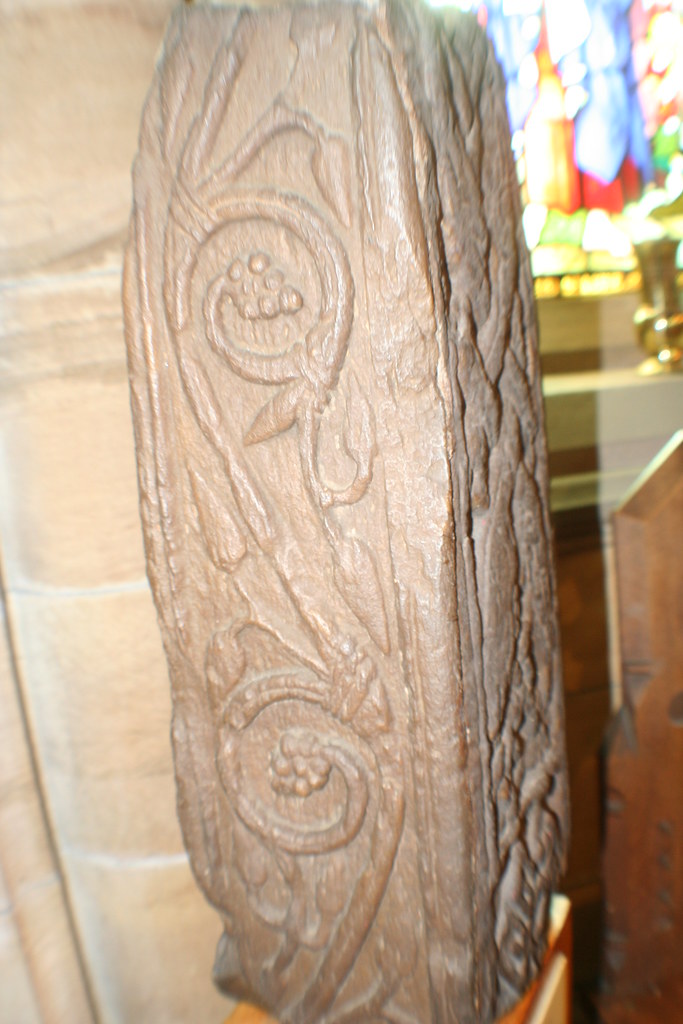
Inside Aberlady Church is a copy of the shaft of the Aberlady Cross which may date from the 8th century. The original was found in the grounds of Aberlady Manse in 1863 and now resides in the National Museum. The carving is of high quality and may be Pictish-Celtic or Anglian in origin. No trace of the rest of the cross has been found. A reconstruction of the cross stands close to the church.

The church, village and immediate vicinity are pleasant and welcoming and deserving of a visit.
Bird watching and golf.
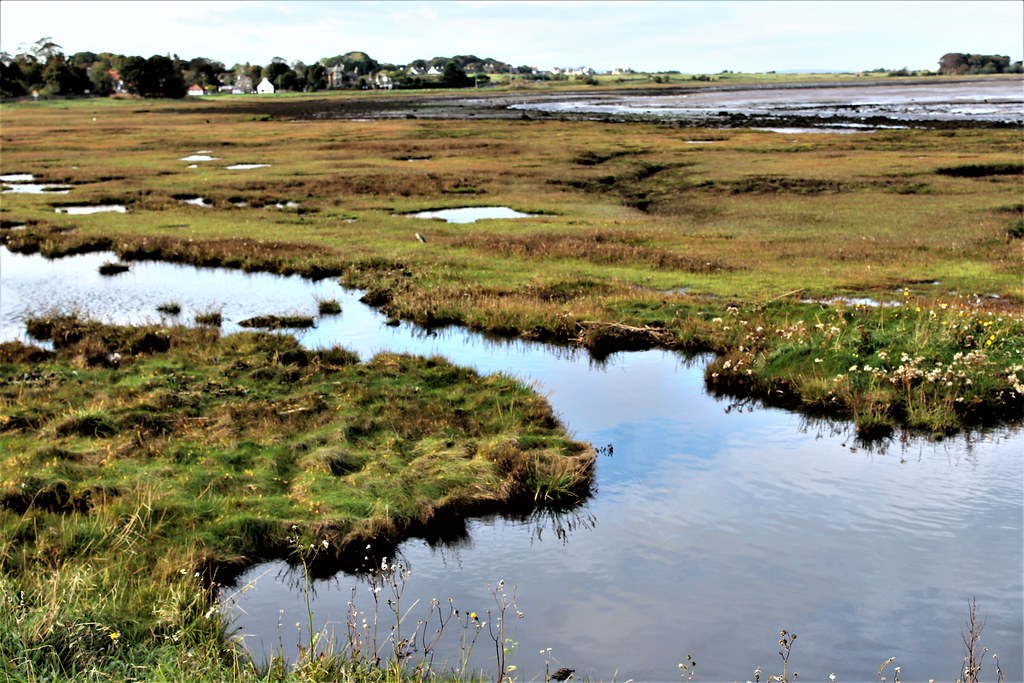
The local bay is a nature (bird) reserve with appeal to tourists and ornithologists. Here, tens of thousands of pink-footed geese arrive from Iceland in the autumn to overwinter.Their massed flight inland shortly after dawn is a great wildlife spectacle. Similarly, their return towards dusk, to avail of seaward roosts, is deserving of monitoring. Below is an image of the route of a four mile walk around the bay which can prove marshy.
Golfers may wish to connect with Gullane Links and.or Luffness Links.


More information for the visitor
Please refer Visitors’ Guide to Scotland, ISBN 978-1-9161332-0-4, for information on bird watching, golf and many other aspects of Scotland. This publication is also available via Kindle.