
Introduction
This evening, I am posting information on the New Town section of Edinburgh, Scotland’s capital city.
The New Town is famous for its elegant, ‘Georgian’ style of architecture.
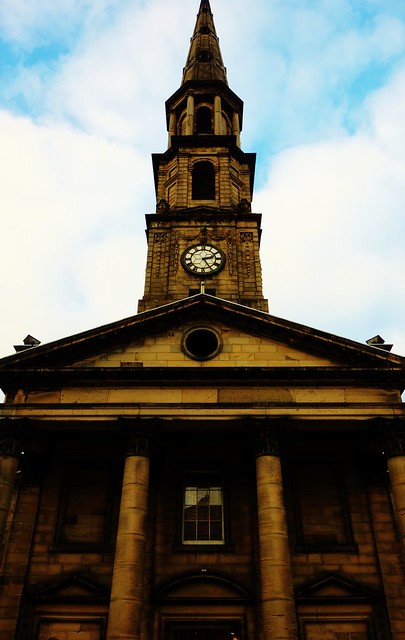
By today’s standards, the designation ‘new’ could be deemed a misnomer. The ‘newness’ is relative to Edinburgh’s medieval Old Town (Royal Mile, etc.) which is a short distance away.
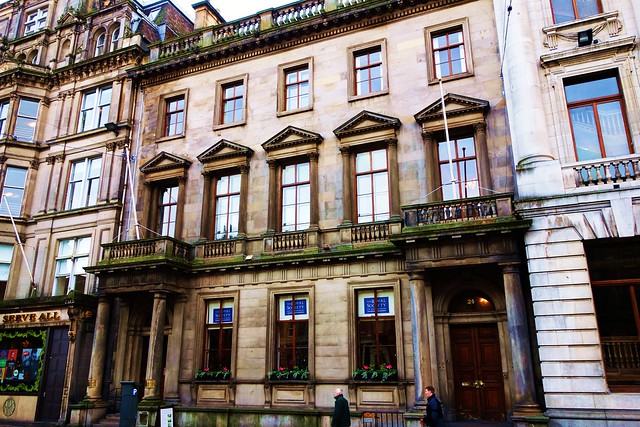


Evolution of the New Town
The genesis of the New Town dates from an inspired, mid 18th century decision to extend the boundaries of Edinburgh.This entailed a parallelogram of land on the north side of what is now Princes Street Gardens.
A competition for the new layout was one by James Craig in 1766, then an unknown 22-year-old architect. Craig used single sided terraces facing over gardens to the south, Princes Street, and the north, Queen Street. In between Princes Street and Queen Street is the main axis called George Street. This stretches from St. Andrew Square in the east to Charlotte Square in the west.
The street names were deliberately selected to signify the union of England and Scotland. Some of the names were derived from the ruling Hanoverian dynasty. Other names like Thistle and Rose, represent Scotland and England respectively. It should not be forgotten that the final Jacobite uprising had been ruthlessly suppressed just twenty years previously. Thus, the naming reflected subtle propaganda to cement the union of England and Scotland under the victorious Hanoverians.

Images
Above and below are provided a selection of images illustrating the distinctive architecture featuring Greco-Roman and Italian influences.
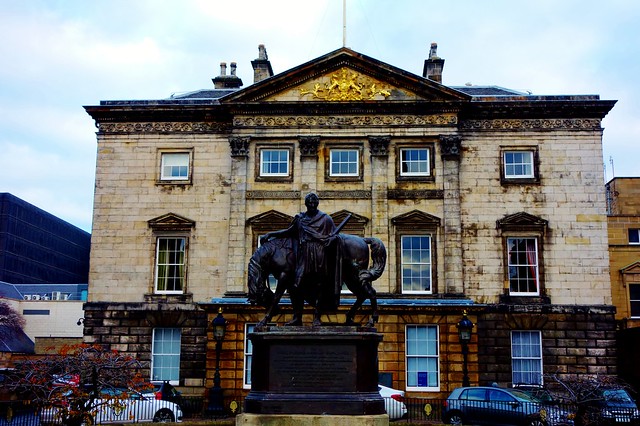


More information.
For more information on Scottish architecture, the City of Edinburgh and much more information for the visitor please refer Visitors’ Guide to Scotland, ISBN 978-1-9161332-0-4. This publication is also avail;able via Kindle.