Introduction
This evening, I am posting information on the historic, Bachelors’ Club Museum in Tarbolton, South Ayrshire. This is thirty-two miles S.W. of Glasgow.
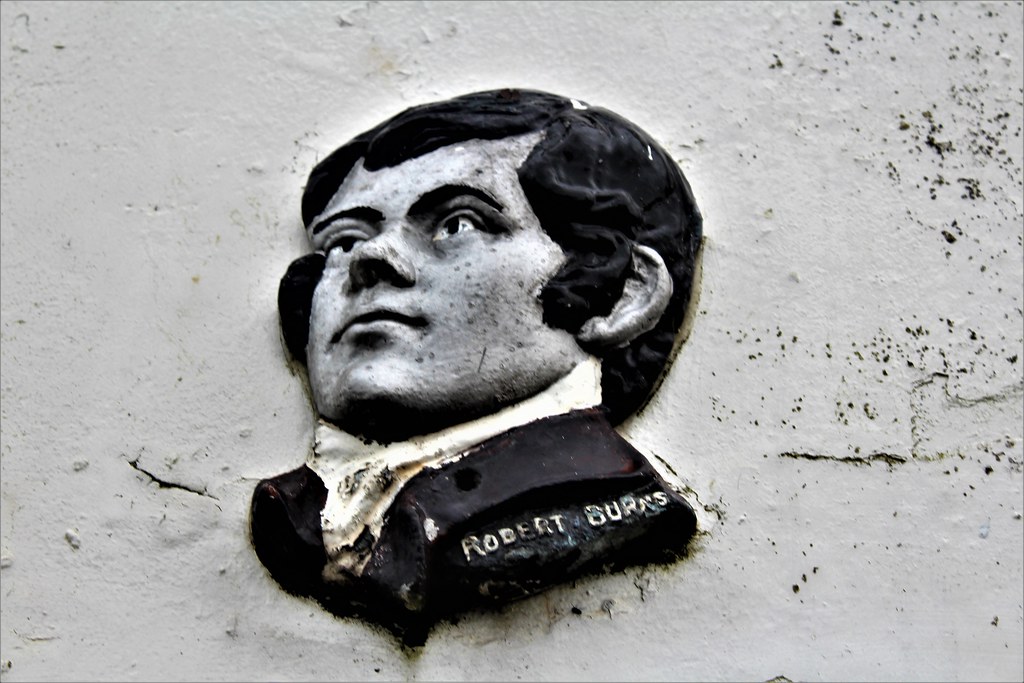
The Bachelors’ Club is closely associated with Scotland’s National Poet, Robert Burns (1759-1796) whose place of birth, Alloway, is just ten miles to the S.W.
Information on the Bachelors’ Club
The Club was formed by Robert Burns together with his brother Gilbert and five other friends as a debating society. Objective was “for the amusement and interest of young men who were ‘a professed lover of the female sex”. In reality the club was a platform to enable Robert Burns to improve his debating and public speaking skills. Burns was initiated as a Freemason in the Club in 1781. The building is now a museum but has limited opening hours.

Information on Robert Burns
Robert Burns has achieved global renown as Scotland’s national poet. During a short life span of just 37 years Burns rose from modest farming family stock in South Ayrshire to write and accumulate some 600 poems and songs. This portfolio included Auld Lang Syne which has become a universal song of parting and New Year welcome. Burns’ literary achievements can be traced to encouragement of his father, William. This was a time (late 18th century) when there were few opportunities for formal schooling. Burns achieved his literary skills through a mix of private tuition and self-learning. Burns’ early life was spent in Ayrshire towns and villages. Such communities included Alloway, Ayr, Kirkoswald, Irvine, Mauchline, Kilmarnock, Dalrymple, Tarbolton and Kilmarnock. He subsequently visited Edinburgh, the Borders, West of Scotland, the Highlands, Galloway and Dumfries. Burns died at Dumfries in 1796 and was buried there, at St. Michael’s Kirkyard.
The life of Robert Burns (1759-1796)
Born on Jan 25th 1759 in a two roomed thatched cottage built by his father, William in Alloway. This building still exists and is now a visitor attraction. Schooled by John Murdoch in Ayr 1773 and by Hugh Rodger at Kirkoswald in 1775. Learned dancing at Dalrymple 1775-1779. Co-founded the Bachelors’ Club in Tarbolton and was initiated as a Freemason there in 1781. Also in 1781 was involved in a failed flax growing and spinning enterprise in Irvine. At Irvine Burns was inspired by one Richard Brown to consolidate his poems and songs into a single publication. On July 31st 1786 there was published at Kilmarnock Poems, Chiefly in the Scottish Dialect by John Wilson. This Kilmarnock Edition generated fifty pounds for Burns, a considerable sum for the time.
Robert Burns Legacy
Burns’ most famous works include: To a Mouse; The Cotter’s Saturday Night; Tam o’ Shanter; and Auld Lang Syne.
Burns was the greatest ever Scottish poet. He lived life to the full, had numerous extra marital affairs and was responsible for a number of illegitimate children. He was a talented poet who took inspiration from the rural life around him together with collected folk stories. Burns left a massive legacy which is remembered at Burns suppers the world over.
Video clip of Auld Lang Syne at Burns Night Supper.
Key sites in a Robert Burns themed tour
Glasgow is a good base to visit ‘Burns Country’. Such a tour can embrace Burns Cottage ( birthplace), Robert Burns Birthplace Museum and the Old Kirk Alloway. Other places include Brig o’Doon, Tam o’Shanter Inn at Ayr, Souter Johnnie’s Cottage,, Bachelors’ Club and Poosie Nansie’s Alehouse
More information
The publication Visitors’ Guide to Scotland includes a section on Robert Burns and sites associated with him. ISBN is 978-1-9161332-0-4. Also available via Kindle.