
This evening, I am posting information on Port Glasgow. This is a town with long industrial history situated twenty miles N.W. of Glasgow in the West of Scotland.
The town is located on the banks of the River Clyde. Along with many other sites in this region Port Glasgow developed as a shipbuilding centre during the Industrial Revolution. Wooden ships were built in the 18th century and then ships constructed from metal in the 19th century. This tradition continues with one company-Ferguson Marine-still in operation.
Summary facts and information on Port Glasgow:-
- Population about 16,600.
- Here, in 1812, Europe’s first passenger carrying paddle steamer, the Comet, was built. A replica of the Comet, can be viewed in the town centre, as shown in image above.
- Home to Newark Castle ( image number 7 below) which dates from the 15th century and is connected with Clan Maxwell.
- Here can be found unique timber ponds, information on which can be found at foot of this post.
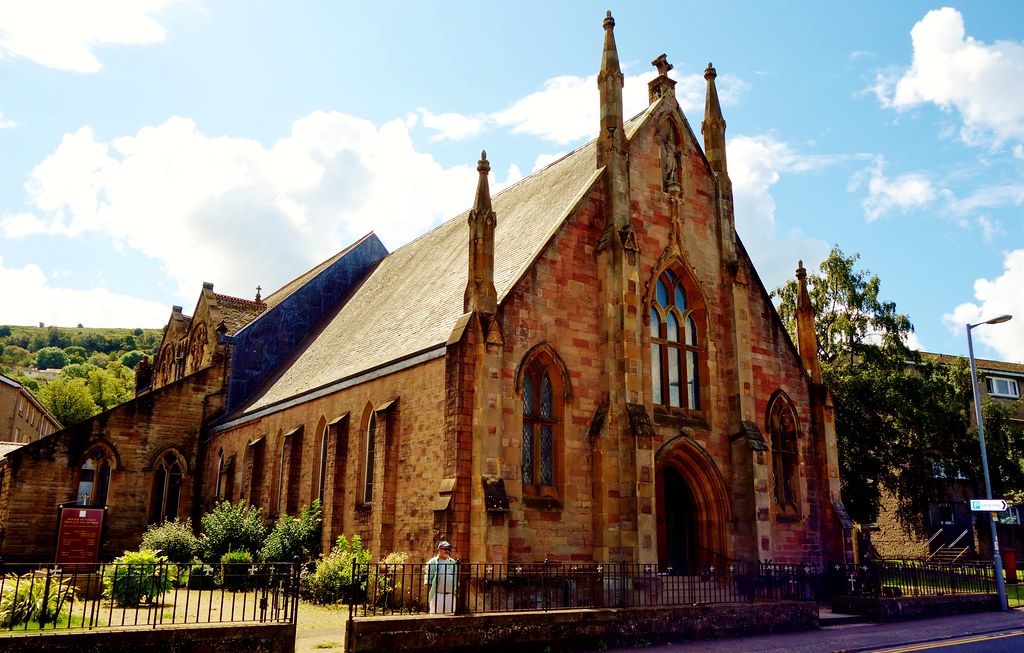
- Home to an impressive Town Hall which dates from more prosperous times in the 19th century.
- Many thousands of visitors pass through the town each year on coach trips from cruise ships moored at nearby Greenock.



Port Glasgow Timber Ponds
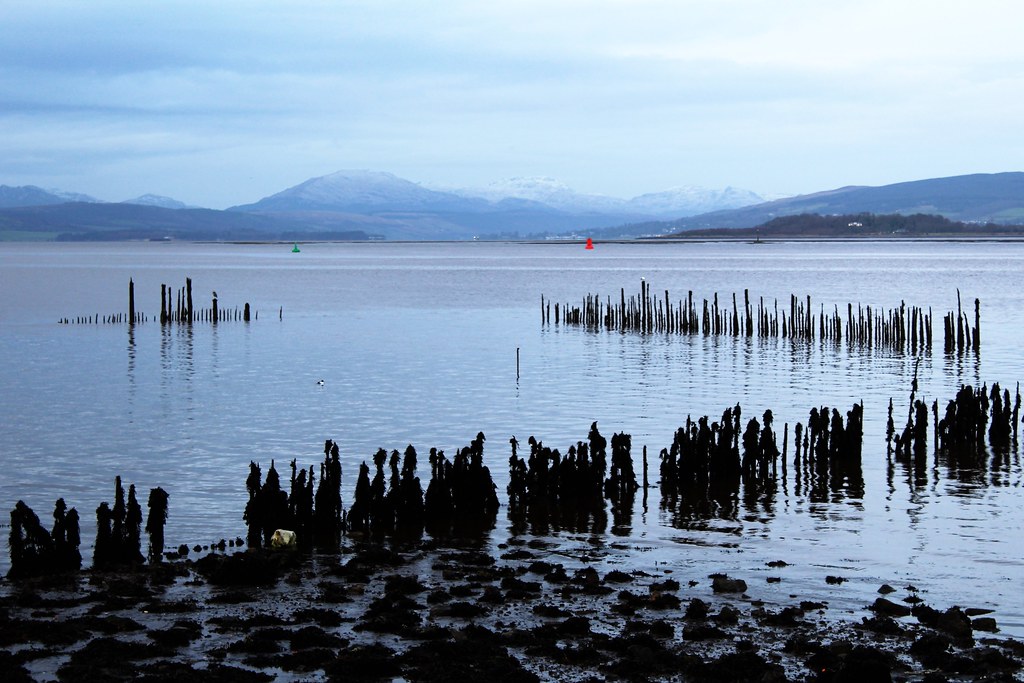
Thousands of wooden poles populate the south bank of the River Clyde between Langbank and Port Glasgow. This feature is prominent at low tide from the adjacent A8 highway.
The poles represent the remains of 18th century rectangular timber ponds. These were constructed as holding pens for tree length logs imported from North America for use in ship construction. Storage in sea water helped to season the wood.
Shipbuilding at Port Glasgow began around 1710 with the last wooden ship built in 1859. The timber trade declined as a consequence of dredging of the Clyde, which gave ships direct access to Glasgow.
The site can be accessed via various walkways.
A good location for bird-watching.

In summary, Port Glasgow does not feature on the ‘tourist trail’. However, the town will be of interest to persons wishing to connect with Scotland’s industrial history.
More information for the visitor
The publication Visitors’ Guide to Scotland contains information on the Clyde Coast, castles and industrial history. ISBN is 978-1-9161332-0-4. Also available via Kindle.