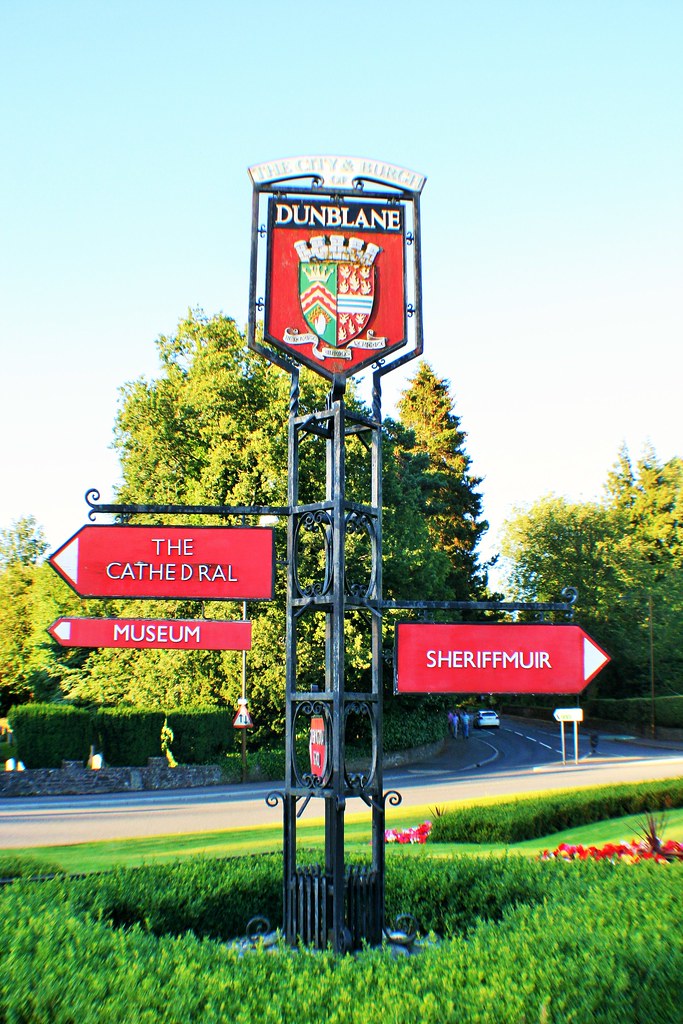

Signage at Fourways Roundabout
Introduction
This evening, I am posting information on the town of Dunblane in central Scotland.
Information on Dunblane: Section1
Dunblane has a population of about 9,000, roughly one tenth the size of its larger neighbour, Stirling. The attracts high volumes of tourists to its famous castle.
In recent times the town has attracted publicity on two accounts:
- Firstly, it is the home of Britain’s former number one male tennis player, Andy Murray. This player who won gold at the London 2012 Olympics.
- Secondly, there was a school massacre here in 1996 resulting in the deaths of 16 children and one teacher. This act triggered a further tightening of Britain’s already restrictive gun ownership laws.
The name is derived from the Gaelic word dun (meaning hill, mound,fortress or castle) and Blaan (chief monastery of Blaan, Bishop of Kingarth). In essence the town grew up around the impressive medieval Cathedral which still dominates the community.
Whilst Dunblane does not attract mass tourism the more discerning visitor would appreciate the wide range of historic buildings as illustrated below.
Here is the Library which was originally established as the Dunblane Institute and Church Hall in 1907.

Public Library
Image below shows St Blane’s Church which dates from 1854. Worship here is Presbyterian under Church of Scotland.
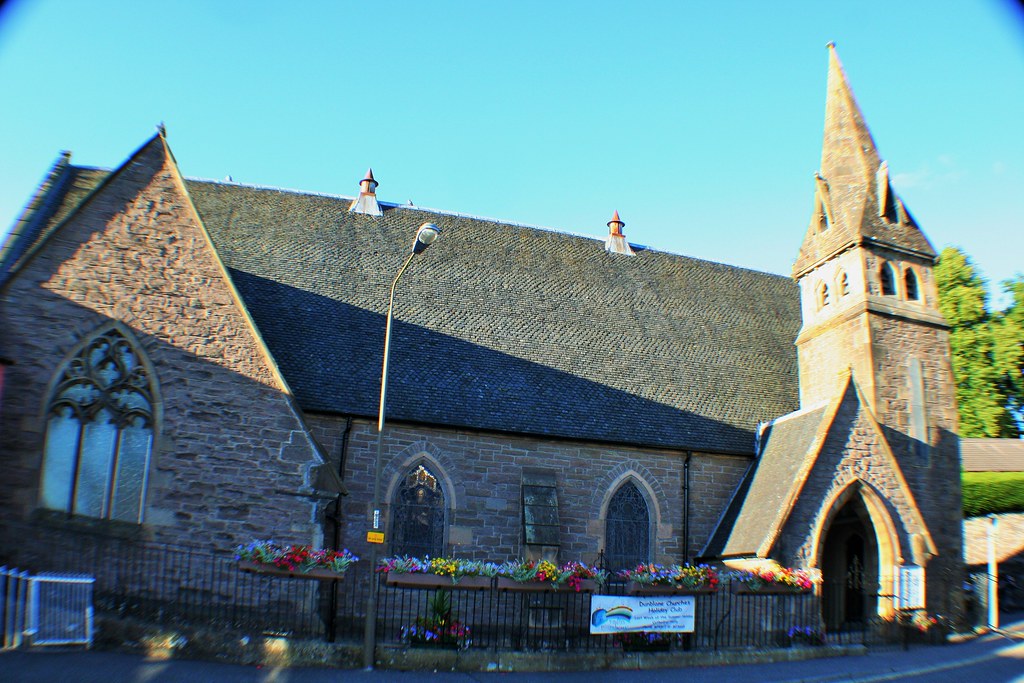

St Blane’s Church

Historic and colourful house.
This is the Leighton Library which dates from 1687 and was established by bequest of Robert Leighton, who was Bishop of Dunblane between 1661 and 1670.


Leighton Library

Historic houses in The Cross
Information on Dunblane: Section 2
Here is the Stirling Arms Hotel. Evidence suggests an inn has occupied this site since the 17th century. Current building dates from 1770. Scotland’s national poet, Robert Burns visited here in 1787. He was subsequently appointed Excise Man ( tax collector) for the town but died before taking up the appointment.

Riverside Pub
Here is an evening view of the town with Cathedral in background and Allan Water (river) in foreground.

Allan Water.
Below is an early 18th century marriage lintel with date and initials of the couple residing at the house.
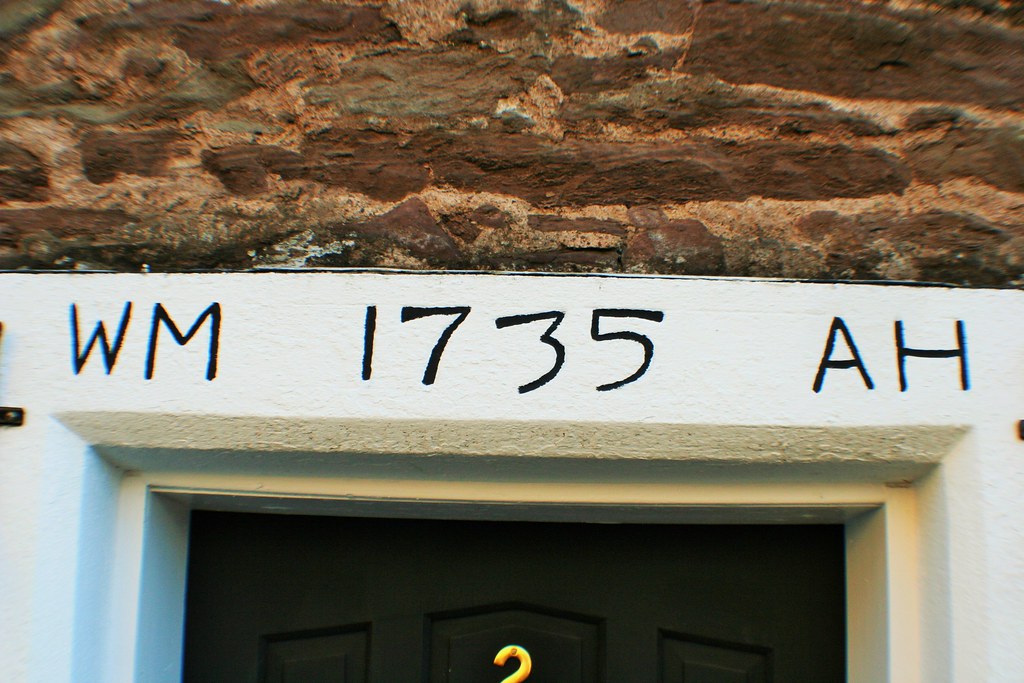
18th century marriage lintel in Bridgend
Here is Dunblane Railway Station which opened in 1848. Today, there are frequent services to Glasgow and Edinburgh.


Train leaving Railway Station.

Town Mill Stair
Image below shows the High Street. Note gold coloured post box (in foregound) attracting attention of photographers. This commemorates Andy Murray’s gold medal at the 2012 Olympics.
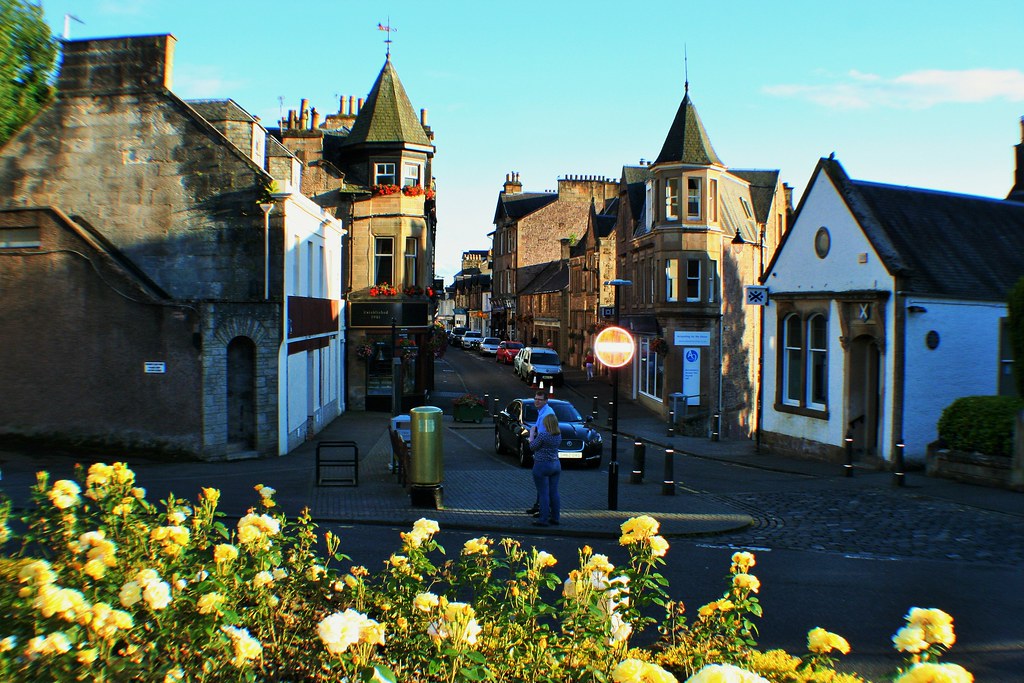

View of High Street
This building dates from 1844 and was the Sheriff Court, gaol and police station. Dunblane was an important legal centre in medieval times.


Former Sheriff Court
Here is Dunblane Museum, located opposite the Cathedral.
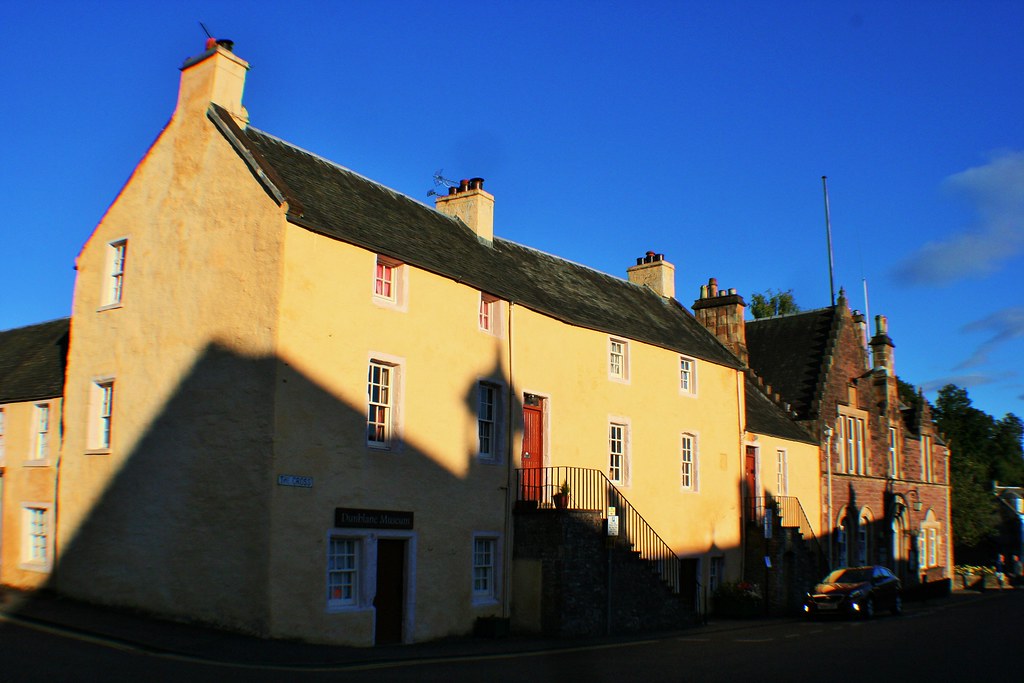

Dunblane Museum
Here is Dunblane Cathedral. This dates from the 12th-15th centuries and ranks as one of Scotland’s important medieval churches. Originally Catholic but now Presbyterian.
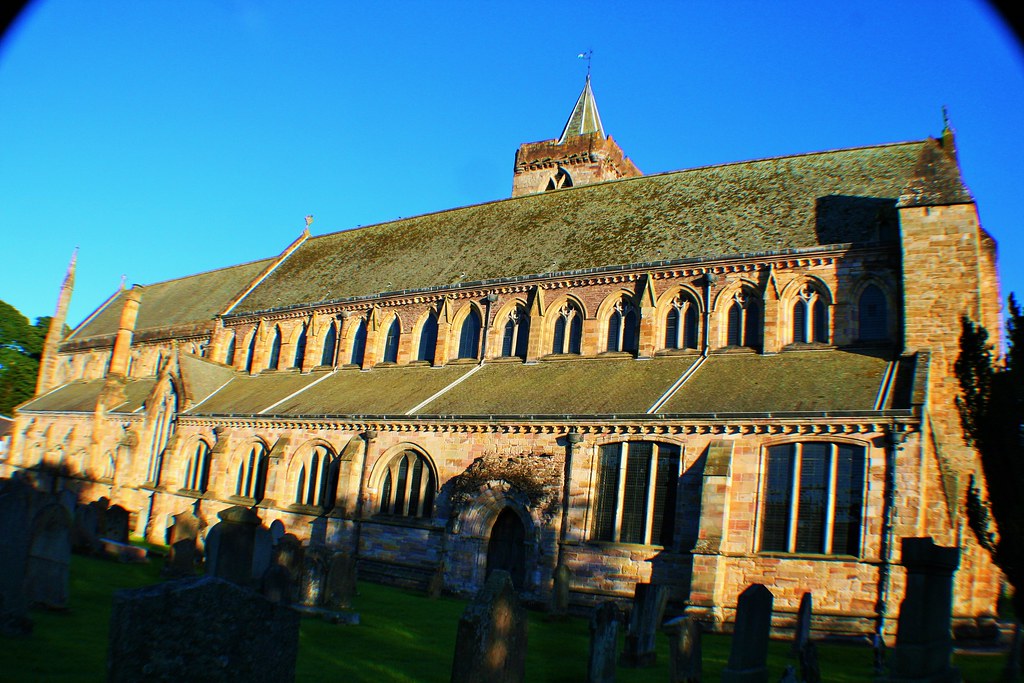

Dunblane Cathedral
Here is St. Mary’s Episcopal Church which dates from 1845. Location is close to the Fourways roundabout.
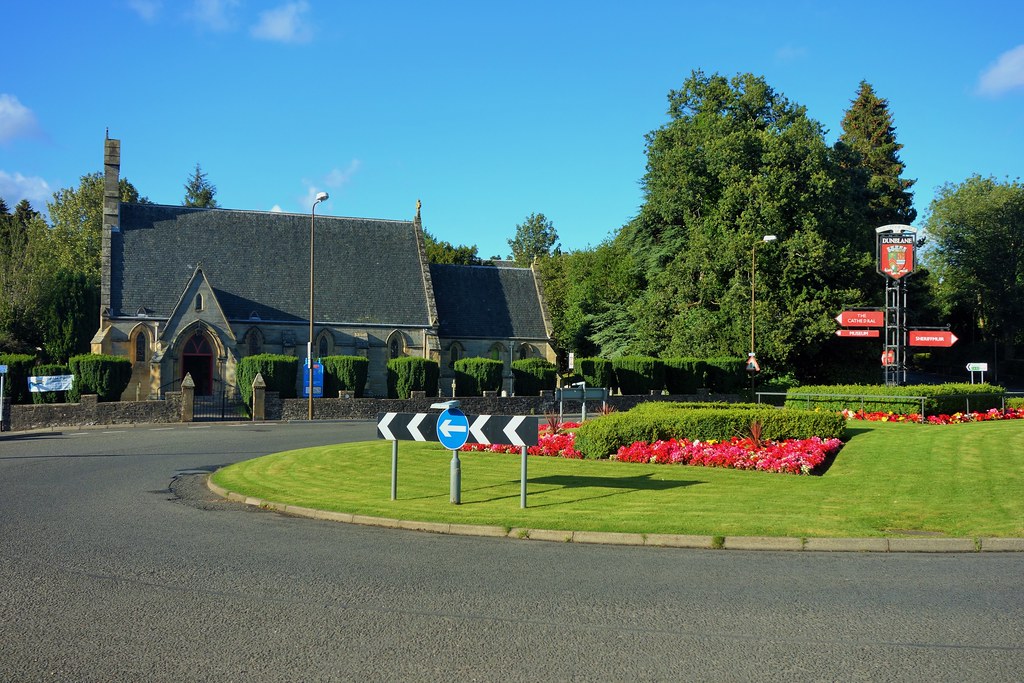

St Mary’s Episcopal Church
Balhaldie House (below) was the town house of the Drummond family. William Drummond was a Jacobite spy who encouraged rebellion in 1745. Charles Edward Stuart ( aka ‘Bonnie Prince Charlie’) slept here on night of Sept 11th 1745 en-route to Battle of Prestonpans.
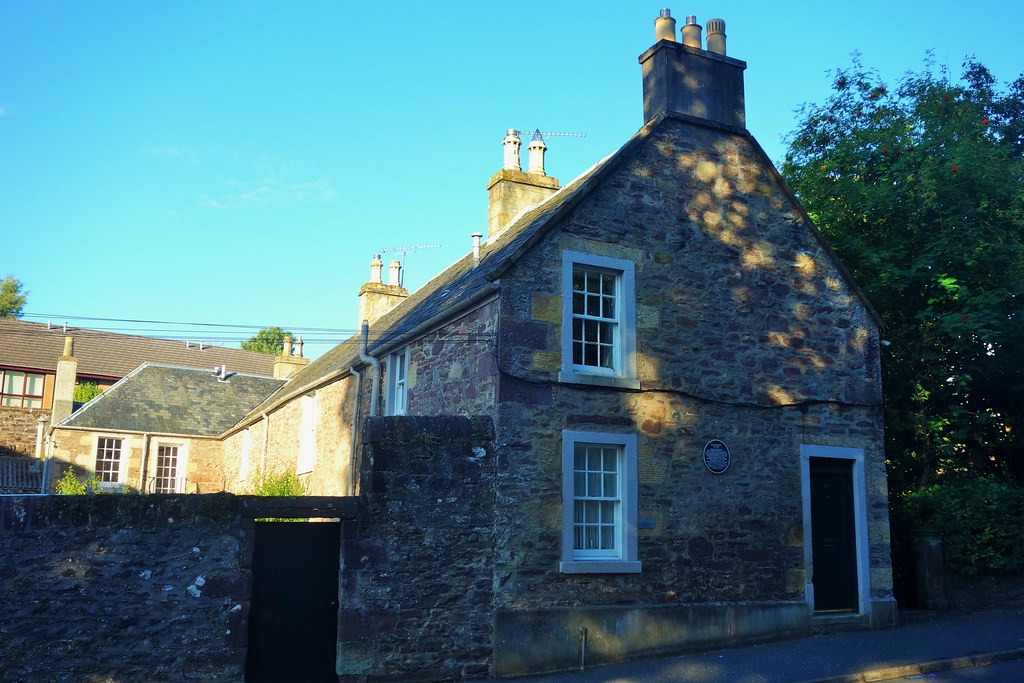

Balhaldie House
More Information
For more information on multiple aspects of Scotland please refer Visitors’ Guide to Scotland, ISBN 978-1-9161332-0-4. This book is also available via Kindle.