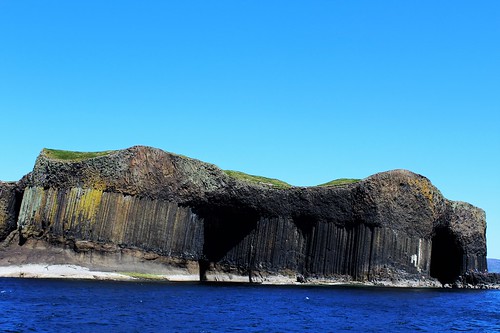

Staffa, Inner Hebrides, Scotland
Introduction
This evening I am focusing on Staffa, a small island off the West Coast of Scotland. Staffa is famous for it’s geology. The island has also been designated a Site of Special Scientific Interest and made a National Nature Reserve.
Information on Staffa-Part 1
Location and Size
- Lies about 7 miles off the west coast of the Isle of Mull and is usually accessed via a three-hour round trip by small boat from Fionnphort (Mull) or Iona.
- Name is of Norse origin and means vertical log stave or pillar.
- Rises to about 135 feet above sea level and extends to about 82 acres.
Geology
- Dates from around 58 million years ago when what is Scotland became detached from North America as a function of continental drift.
- Formed of near horizontal sill of black, fine -grained basalt surmounted by lava in a process which lasted many hundreds of thousands of years.
- Most of the columns are hexagonal although others have between three and eight sides.Diversity in shapes due to variations in cooling rates.
- Most famous feature is Fingal’s Cave which was probably created by the waves pummeling the soft ash layer beneath the basalt columns. Other notable caves include Clamshell Cave, Boat Cave, Cormorant Cave and Mackinnon’s Cave.
Mythology
- Associated with Gaelic giant Fingal,who has Irish connections, and another giant named Torquil MacLeod of Eigg.
Human Occupation
- Now uninhabited. There are records of a few families farming on Staffa until around 1800.
Information on Staffa-Part 2
Famous Visitors
- Sir Joseph Banks (1772).
- Dr Johnson and Boswell (1773).
- French geologist, Faujas de St Fond (1784).
- Dorothy Wordsworth (1803).
- John Keats (1818)
- W.M. Turner (1831).
- William Wordsworth (1833).
- Queen Victoria and Prince Albert (1847)
- Jules Verne (1859).
Arguably, the visitor who did most to bring the island to world attention was Felix Mendelssohn who landed in 1829 and was inspired to compose his Hebridean Overture whilst listening to the waves in Fingal’s Cave.
Wildlife
Includes:
- Fulmar
- Great Skua
- Bottlenose Dolphins
- Common Seal
- Shag
- Grey Seal.
Ownership
Now rests with National Trust for Scotland.
Images of Staffa
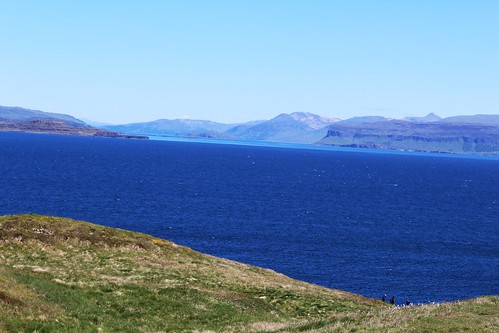

View west towards Mull from Staffa
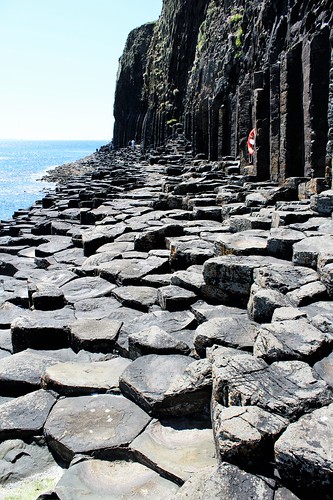

Basalt columns
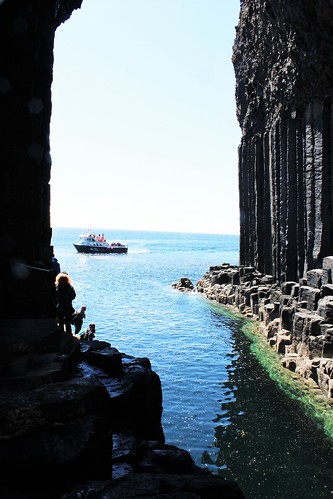

View from Fingal’s Cave
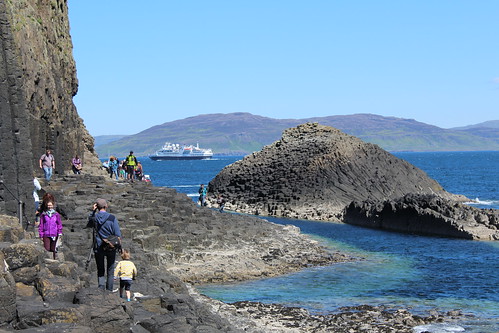

Access path to Fingal’s Cave
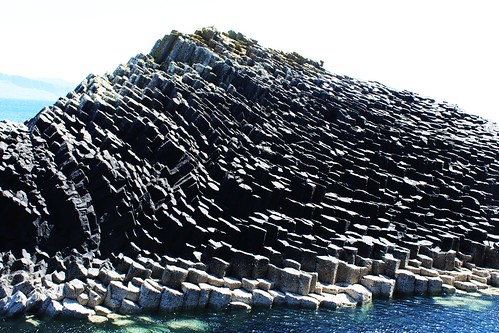

Basalt columns
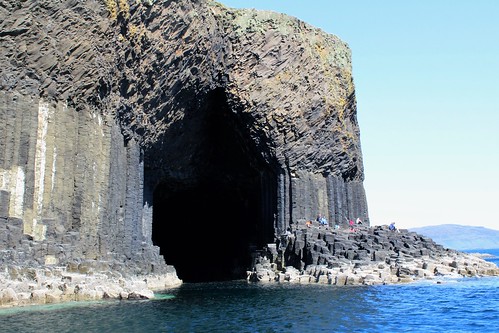

Fingal’s Cave
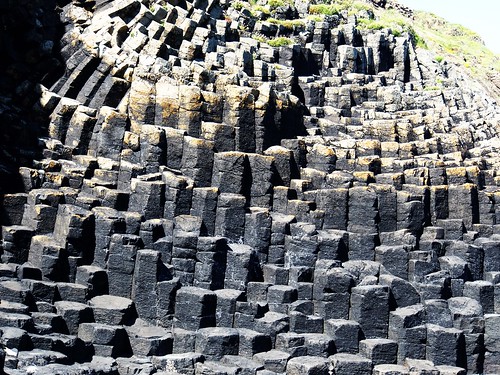

Basalt columns
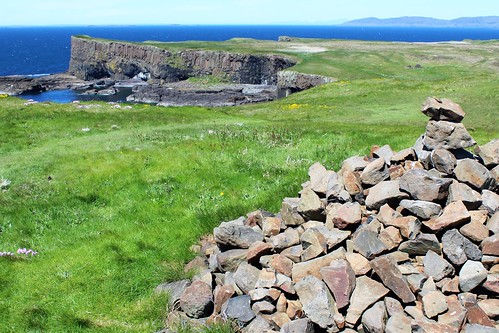

View north
More information
The publication Visitors’ Guide to Scotland provides a wide range of information on Scottish islands for the tourist. ISBN is 978-1-9161332-0-4. Also available via Kindle.