Introduction
This post reprises a central Scotland tour as set out below.
Drummond Gardens.

Information on the central Scotland tour-Part 1
First to Forteviot, now a quite village but in the first millennium was a power base for the Picts. Kenneth Mac Alpin died there in AD 858. Forteviot is the earliest identified royal centre in Scotland.
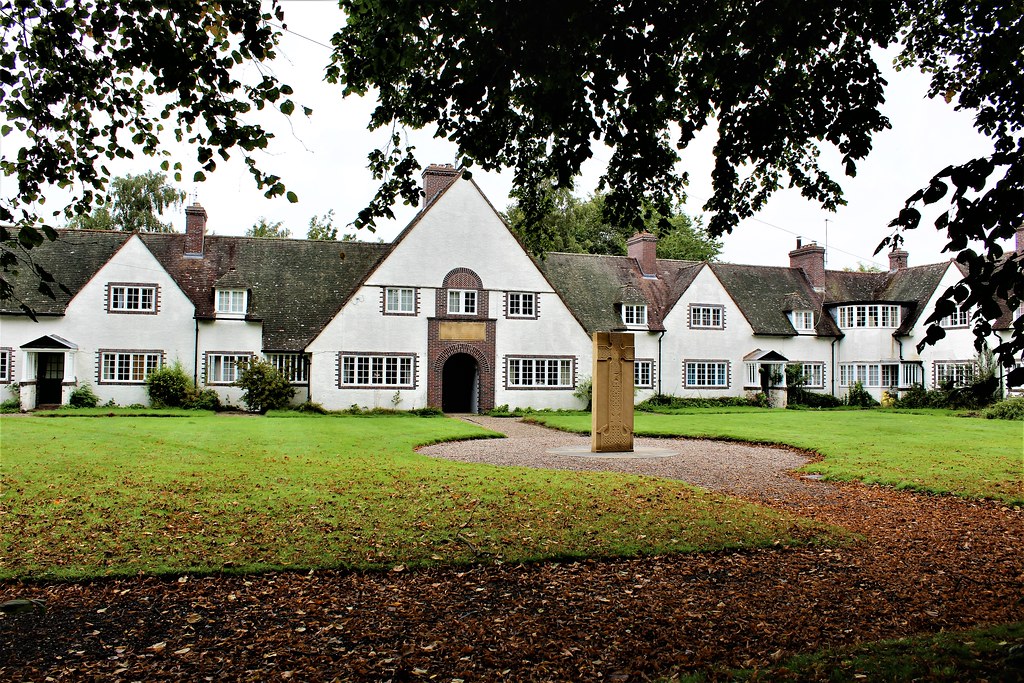

Next to nearby Dunning on the outskirts of which sits the remains of a Roman military camp.This probably dates from the Flavian campaigns of the AD 80s.
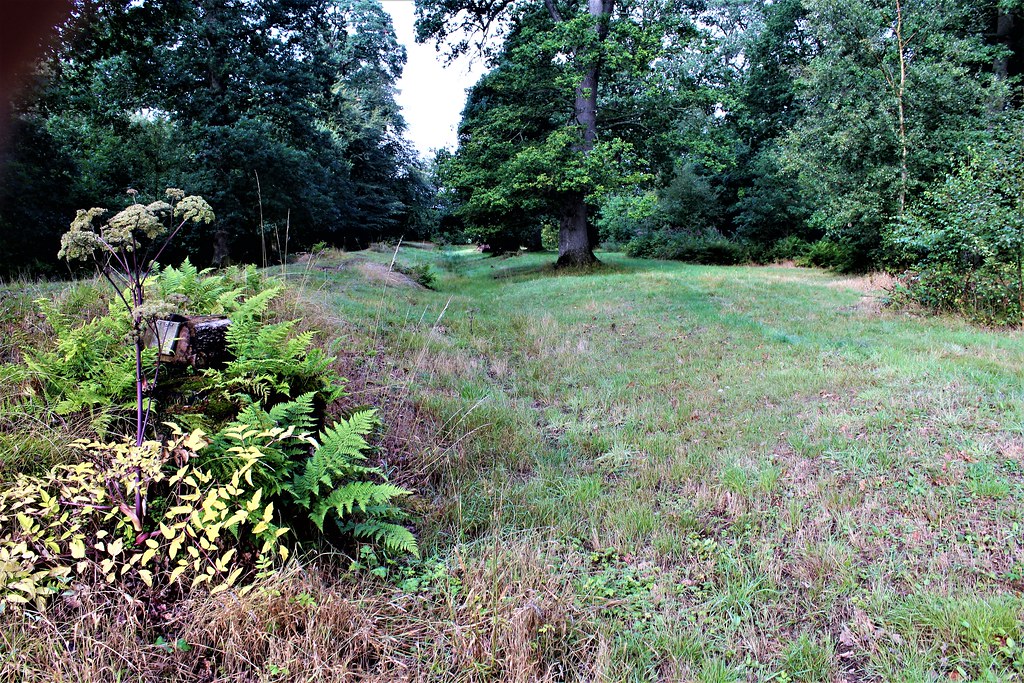
Roman Military Camp at Dunning.

Artist’s impression of the Roman Camp


Next to a redundant church in the village of Dunning. Inside this building stands the Dupplin Cross which is associated with the Pictish Palace at Forteviot, about three miles away. The cross had stood on open ground, exposed to the elements, for about 1200 years. This cross:
- Dates from around AD 800.
- Was made from sandstone for the Pictish king, King Constantine who ruled AD 789-820.
- Is the only surviving complete, free-standing cross from the Pictish region.
- Stands 3m/9.5 feet high.
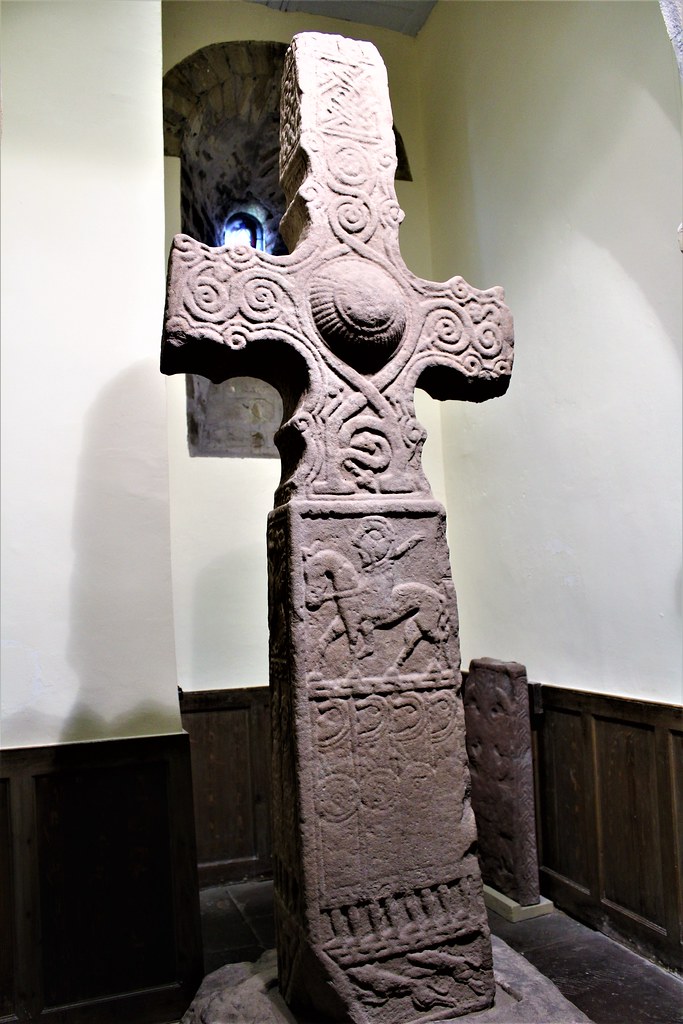
Dupplin Cross

The Historic Scotland representative on duty explained in great detail current interpretations of the various symbols carved on the cross.
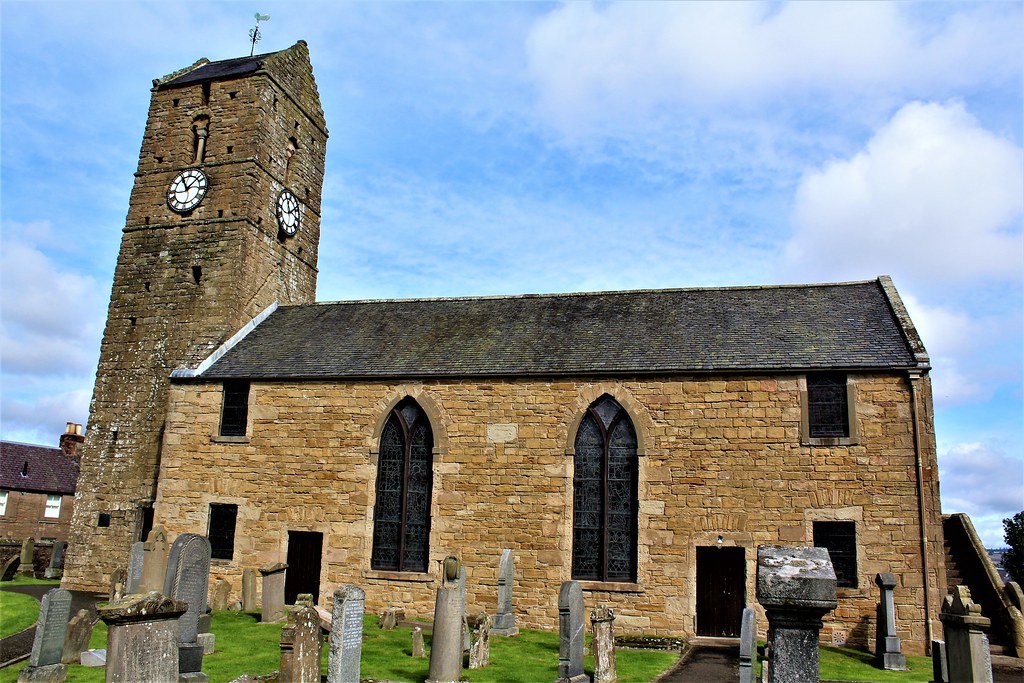
Dunning Church.

Information on the central Scotland tour-Part 2
Next to Tullibardine Distillery (whisky) which sits at foot of the Ochills from where the key water supply is obtained. Beer has been brewed on this site for hundreds of years. To this day at Tullibardine, the visitor can purchase a beer branded ‘1488’. This is in recognition of the purchase by King James IV of a supply of beer at the location. This was in celebration of his coronation.
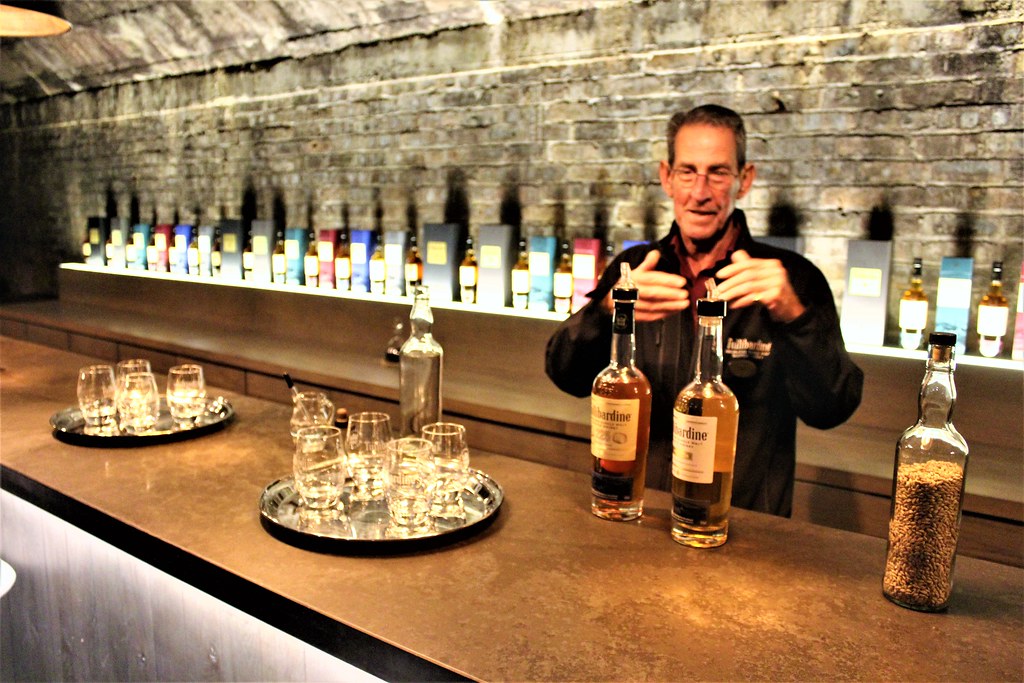
Tour Guide at Tullibardine

Tullibardine is one of Scotland’s younger distilleries, dating from 1949 when established by Welshman, William Delme-Evans. Subsequently, the distillery underwent many ownership changes including ‘mothballing’ for a period. Now under ownership of French wine company, Picard.
We undertook a guided tour of the distillery which took us through the malting, mashing, fermentation, distillation and maturation processes. Culminating was tastings of the single malt.
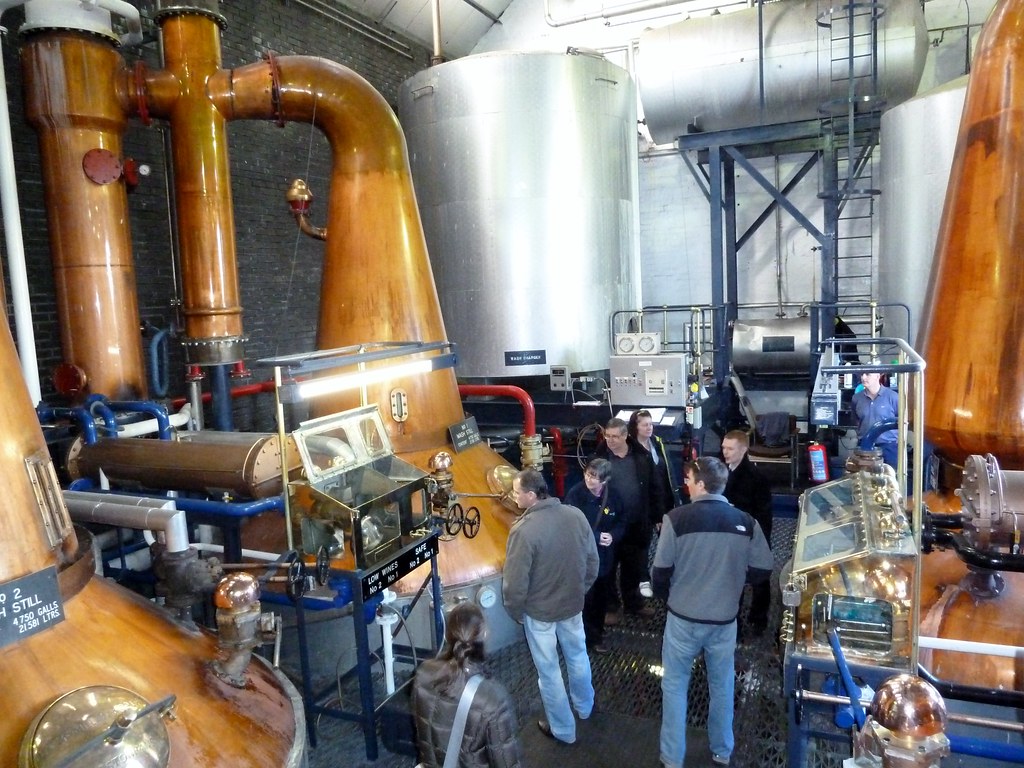
Stills at Tullibardine

Information on the central Scotland tour-Part 3
Next, to Stirling Castle which, over the last 1000 years, the castle has played a critical role in Scotland’s history. Strategic location has witnessed two major battles in medieval time. During the renaissance period the castle housed a Royal Palace and was, effectively, the capital of Scotland for certain periods.
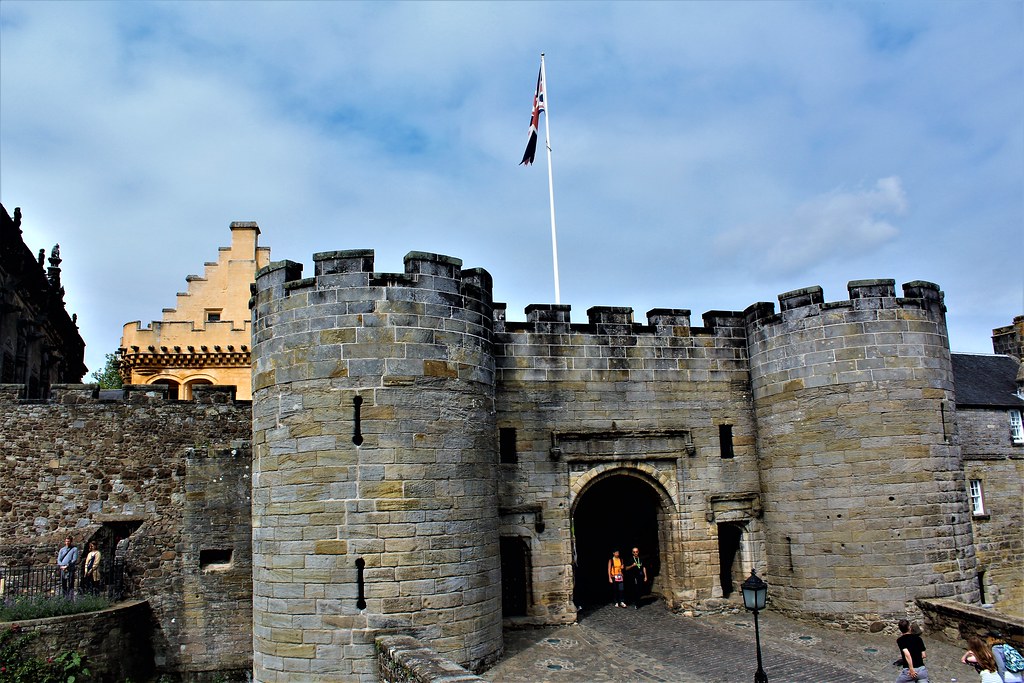
Stirling Castle-Main Entrance

During the Wars of Independence (13th and 14th centuries ) the castle had a prominent strategic role. Here control over the central plain was effected. Invading armies (from England) had to travel across the plain to control Scotland. Consequently. Stirling was known as the ‘buckle in the belt’ of Scotland. Two prominent battles took place within a few miles of the castle, namely Stirling Bridge in 1297 and Bannockburn in 1314. Both battles resulted in positive outcomes for the continuing independence of Scotland.
In addition to the military function, the castle served as an important Royal Palace and housed the courts of James IV and James V. From the late 1400s to 1603 the castle was, for all practical purposes, the capital of Scotland. The infant Mary was crowned Queen of Scots in the Chapel Royal in 1543.
The Castle’s military role continued right through to the 1960s when the British Army finally marched out. The building was then transferred to civilian control and a programme of refurbishment commenced. This culminated in the restoration of the former Royal Palace at a cost of GBP 12.0M.

View from Stirling Castle.

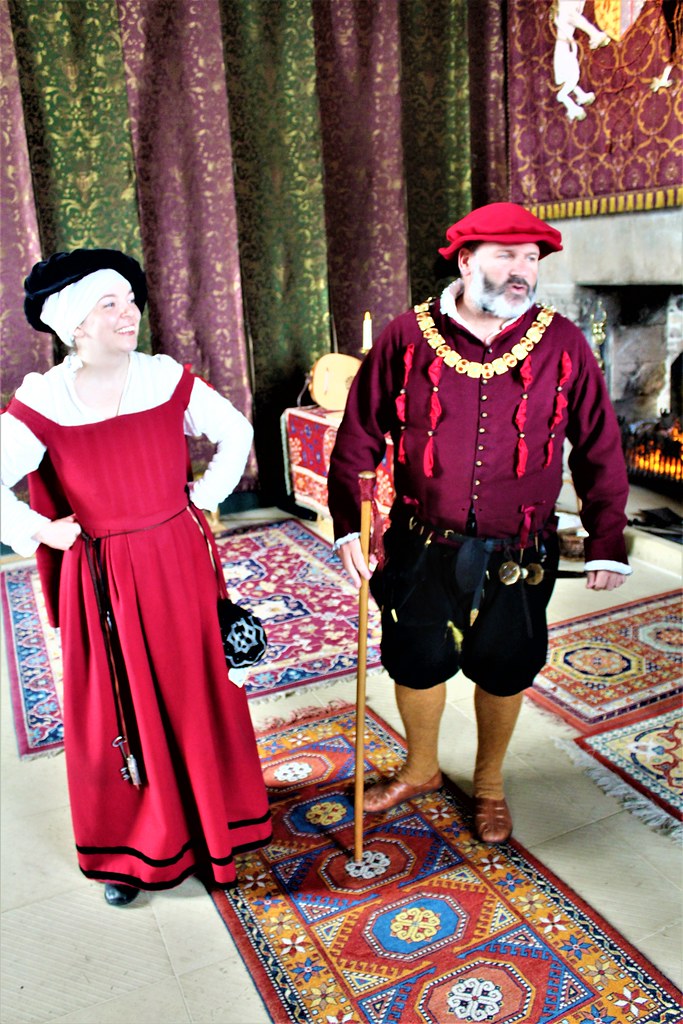
Reenactment courtiers at Stirling Castle.

Information on the central Scotland tour-Part 4
Next to Crieff and the spectacular Drummond Gardens on which summary information is provided below.
- The current garden ultimately traces back to the 2nd Earl Drummond. This earl succeeded to the title in 1612. He was influenced by gardens he had seen in France.
- The garden features as its centrepiece an obelisk sundial which has 50 faces to show the time in Europe’s capital cities.
- Surveys in 1755 and 1810 reveal the garden was well established by those dates.
- Leading gardener, Lewis Kennedy was responsible for the parterre and formal terracing during the early 19th century. Drummond is believed to be Lewis Kennedy’s greatest career achievement. He was responsible for the formal flower garden.
- Queen Victoria visited the garden in 1842. She ‘walked in the garden which is really very fine with terraces, like an old French garden’.
- Whilst recognising French influences, the statuary in the garden suggest an underlying Italian inspiration.
- The gardens suffered neglect during the two world wars. Phyllis Astor, wife of the 3rd Earl of Ancaster, oversaw extensive restoration work.
- The main feature today is the box hedge parterre, designed to represent the Saltire (Scotland’s flag).
- The garden contains many ornamental trees including Japanese maples. Other trees include the Fastigiate Golden elm, two Purple oaks, specimens of Acer pseudoplatanus and Prunus cerasifera.
- The conical shaped clipped trees are English and Irish yews.
- Design ensures the surrounding countryside is drawn into the garden.
- The garden requires the services of three gardeners working full-time and three working part-time.

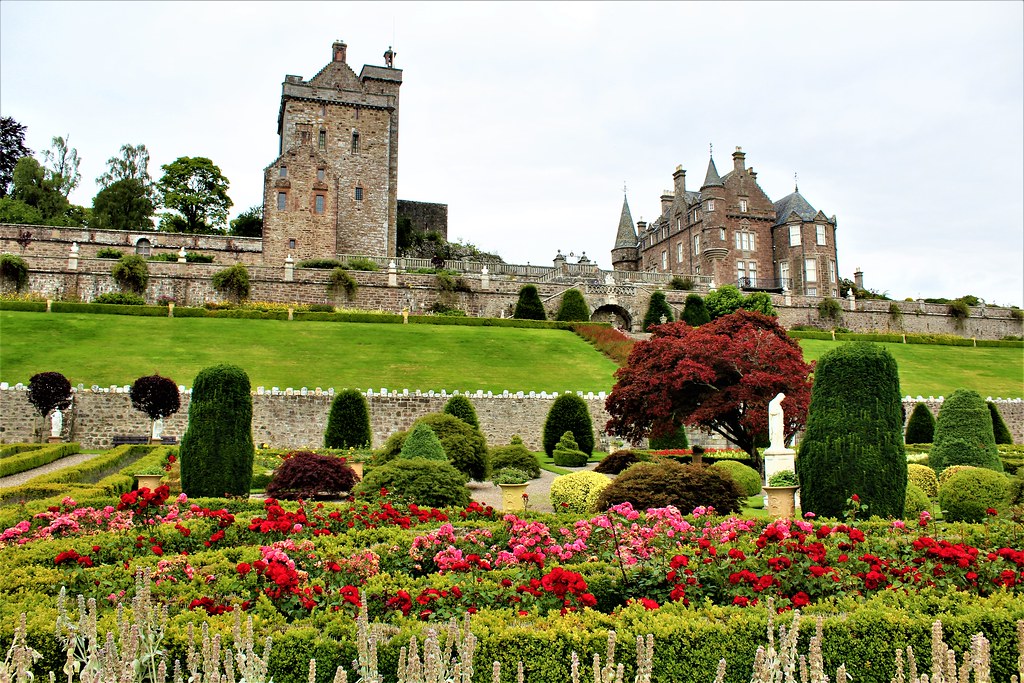

Drummond Gardens.

Information on the central Scotland tour-Part 5
Next to Croft Moraig Stone Circle near Aberfeldy, which is one the best examples of the type on mainland Scotland.
- First phase dates from Late Neolithic, about 3000 BC and consisted of heavy timber posts.
- Later, the posts were replaced by eight stones graded in height and in a horseshoe shape.
- A kerbed rubble bank with 60ft diameter enclosed the stones.On the bank a decorated stone slab was placed in line with the southern moonset.
- A circle of about 40 ft in diameter, comprising 12 large stones about 5ft 6″ in height was erected outside the horseshoe.To the ESE and about 18ft outside the ring two stones, 8ft 6″ apart formed an entrance. The northern stone stood close to the equinoctial sunrise.
- Finally, graves may have been dug outside the stones.
The construction, design and alignments of this circle are consistent with recumbent stone circles of N.E.Scotland.
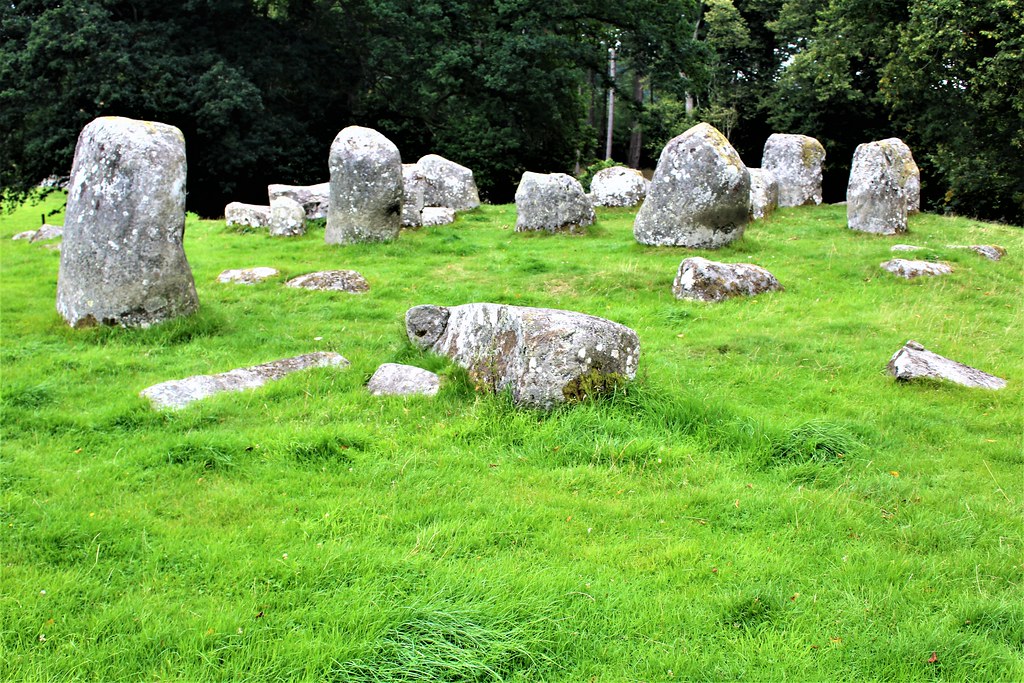
Croft Moraig Stone Circle

Information on the central Scotland tour-Part 6
Next to nearby Aberfeldy to visit the Black Watch Monument site.
The Black Watch, one of Scotland’s leading military units, traces its origins to a muster which took place in 1739. This was in the Weem Cow Park on the north bank of the River Tay, immediately opposite the monument. The monument was positioned on the south bank of the Tay due to the risk of flooding in the fields opposite.
In 1739 King George II authorised the companies be formed into a regiment of foot. That same year they held their first regimental parade on the banks of the River Tay at Aberfeldy.
The monument was unveiled in 1887 by the Marquis of Breadalbane. This was to commemorate the first muster of the Regiment in 1740. The muster took place on the Weem Cow Park on the north bank of the River Tay, in the Parish.
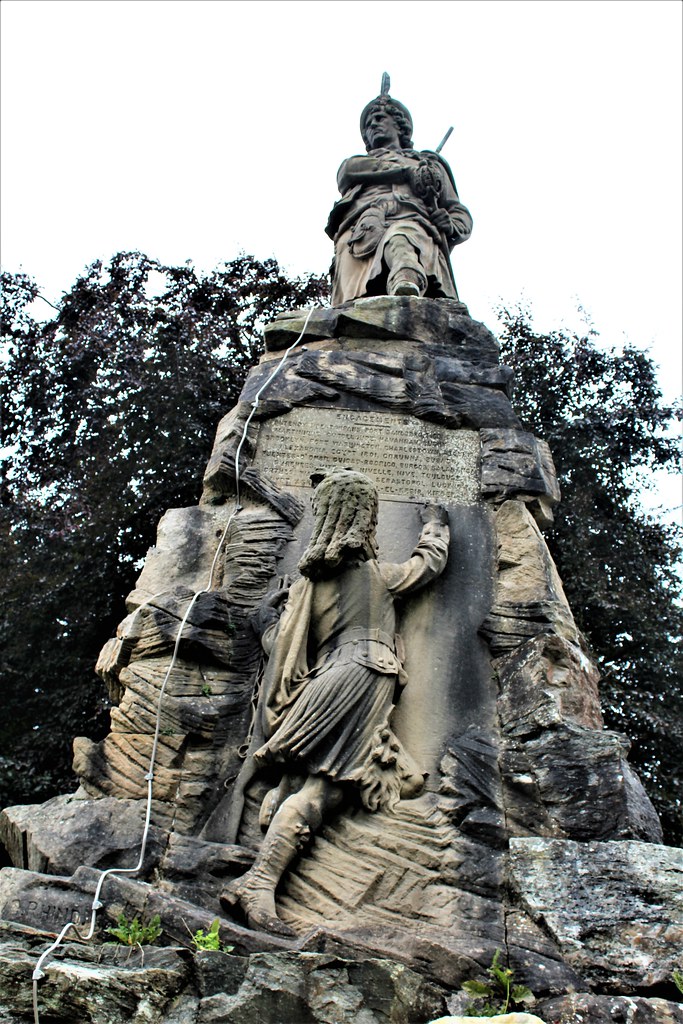
Black Watch Monument

Site of raising of the Black Watch


Finally, we returned to our lodgings in Dunkeld, arriving about 7.00pm.
More information
The publication Visitors’ Guide to Scotland contains a wide range of information for the visitor. The ISBN is 978-1-9161332-0-4. This book is also available via Kindle.