Introduction
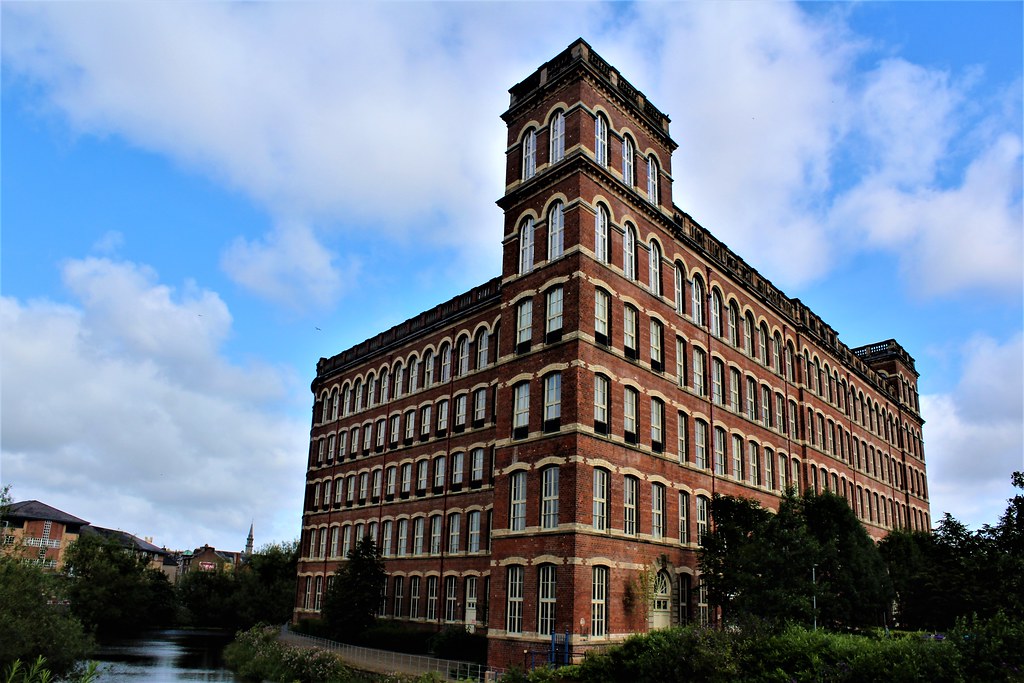
This evening, I am focusing on the former Finishing Mill in Paisley, S.W. Scotland. This building had been part of the former Anchor Mills thread making complex. Paisley is just twelve miles west of Glasgow.
Anchor Mill, Paisley, Scotland

More information on Anchor Mills
Although no longer used for industrial purposes, the building represents an important legacy of Paisley’s former leadership of the thread manufacturing industry. Summary facts and information:
- Built 1886 for John Clark of the eponymous Paisley based family of thread manufacturers. Clark & Co merged with J & P Coats in 1896 as well as other businesses in England and the USA. This new company had its headquarters in Glasgow, and upon flotation had a market value in the region of £22 million, with roughly 25,000 shareholders. This was one of the world’s first truly global companies, employing around 21,000 people worldwide. The company’s successor is Coats Group plc, a British multinational company. It is the world’s largest thread and structural components’ manufacturer for apparel, footwear, and performance materials.
- Constructed in red brick and extends to 36,000 square feet.
- The interior features a central well topped with an unusual glass lantern light. This design allows light to flood in and provide space for drive belts to reach machines on top floor from engine on ground floor.
- The anchor mills complex reached a peak of 51 acres in 1952 but work ceased in the 1980s.
- After a period of dereliction, the site was regenerated under auspices of the Prince’s Regeneration Trust (Prince Charles at the time) and was re-opened in 2005 as a combined location for business units and private apartments.

Interior of refurbished Anchor Mill, Paisley

- The White Cart Water (river) flows around two sides the building and forms the impressive Hamills Waterfall
Anchor Mill and White Cart Waterfall, Paisley. (Note wedding shot in bottom right.)

An attractive building forming an important part of Scotland’s industrial history.
More Information
For more information on many aspects of Scotland please refer Visitors’ Guide to Scotland, ISBN 978-1-9161332-0-4. This is also available via Kindle.