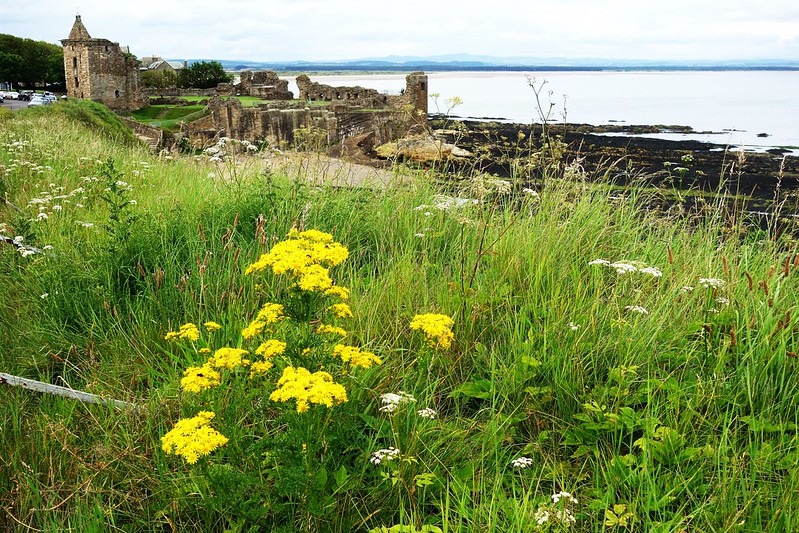
Coastal view of St Andrews Castle, Scotland
Introduction
This post reports on one of the most important fortifications on Scotland’s east coast, namely St Andrews Castle, Fife. This is located in the town of St Andrews which is a popular visitor destination. The town combines history, learning, culture, a coastal resort, and the home of golf.
Information on St. Andrews Castle-Part 1
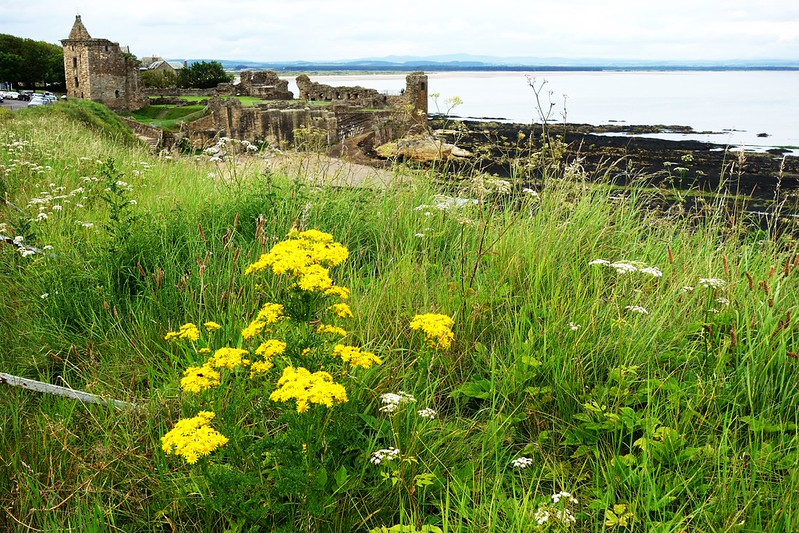
The site is a logical one for defensive purposes. The coastal promontory protects on the north and east by cliffs and the sea. A deep ditch protects the site on the south and west sides.
A castle has occupied the site since the 12th century. The current structure dates from a re-build in the late 14th century. Over the years St Andrews Castle has been fully exposed to the physical turbulence of Scottish history. This includes the Wars of Independence (13th C) and Reformation (16th C).
Information on St. Andrews Castle-Part 2
A brief chronology is as follows:
- St Andrews was the power base of the bishops who controlled the Scottish Church during medieval times. (Close by are the ruins of the once magnificent St. Andrews Cathedral.) The castle formed the residence-and power base- of the Scottish bishops from around AD1200.
- During the Wars of Independence the castle frequently changed hands and was subject to a cycle of destruction and repair. In 1337 it was dismantled by Sir Andrew Moray to prevent the building falling into English hands.
- The castle remained a ruin for about 50 years post 1337. It was then rebuilt by Bishop Walter Traill in the late 1300s.
- The 1540s witnessed major turbulence when the castle was under control of Cardinal David Beaton (1539-46). This Catholic official took a firm stance against the encroaching Reformation. In this context he had George Wishart burnt to death for heresy in 1546. Within a short period the Cardinal himself had been murdered by Protestants who took control of the castle.In turn the Protestants came under siege for 12 months This culminated in a bombardment by a French fleet which forced the surrender by John Knox and others. During the long siege of 1546-7 underground mines (tunnels) and counter-mines were dug under the castle, This engineering can still be viewed.
- Repairs were undertaken to the castle in the 1560s by Archbishop Hamilton.This archbishop was, unfortunately, hanged in 1571.
Information on St. Andrews Castle-Part 3
- Post the 1560 Reformation some attempts were made to re-establish the authority of the bishops and by implication the castle. However,the final death knell occurred after 1689 when bishops were abolished by King William and Queen Mary. The castle then, progressively, fell into ruin.This process exacerbated by the local council who used the masonry to repair and extend the harbour pier. There is another dimension in that the coast on which the castle sits is subject to erosion.
A tour of the castle ruins can include the South Front, Fore Tower, Entrance Gateway, South Range, Blockhouse, Chapel Range, Mine and Countermine, East Range, Kitchen Tower, North Range, Sea Tower and ‘Bottle Dungeon’.
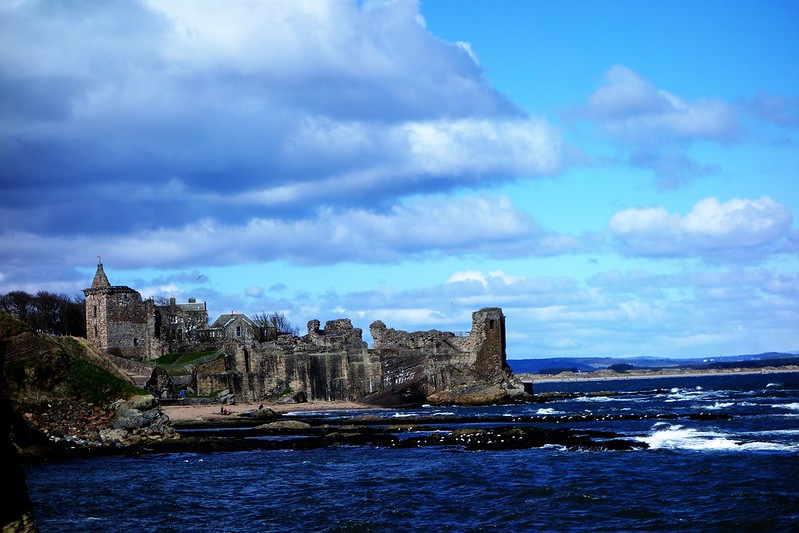
Coastal View
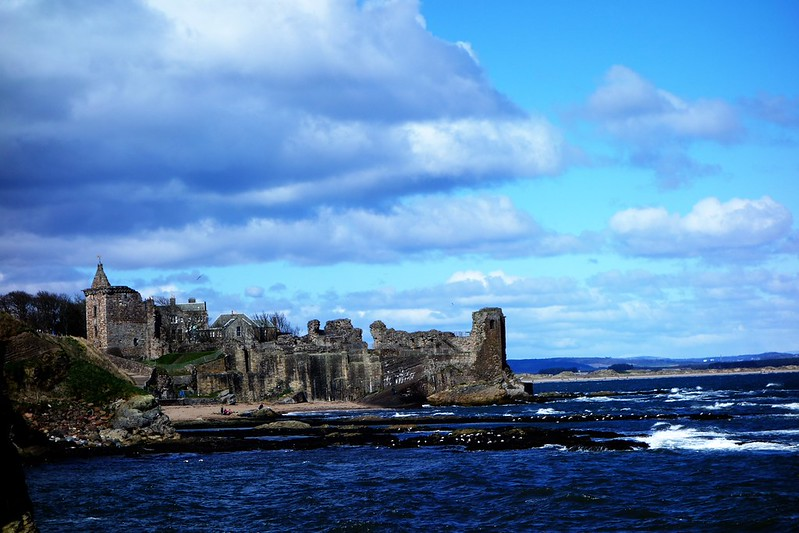
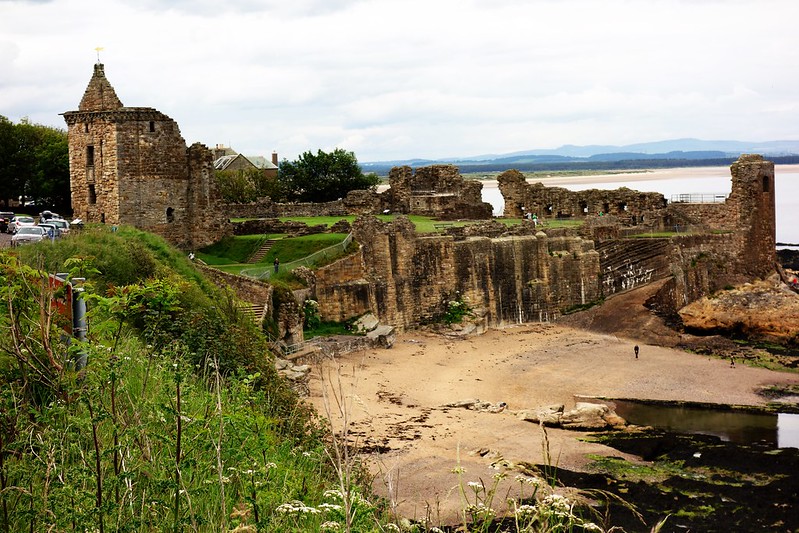
St Andrews Castle, Scotland
More Information
For more information on castles and Scotland in general please refer Visitors’ Guide to Scotland, ISBN 978-1-9161332-0-4. This book is also available via Kindle.