Introduction
This evening, I am reporting on my visit yesterday to the former Roman garrison of Vindolanda in northern England.
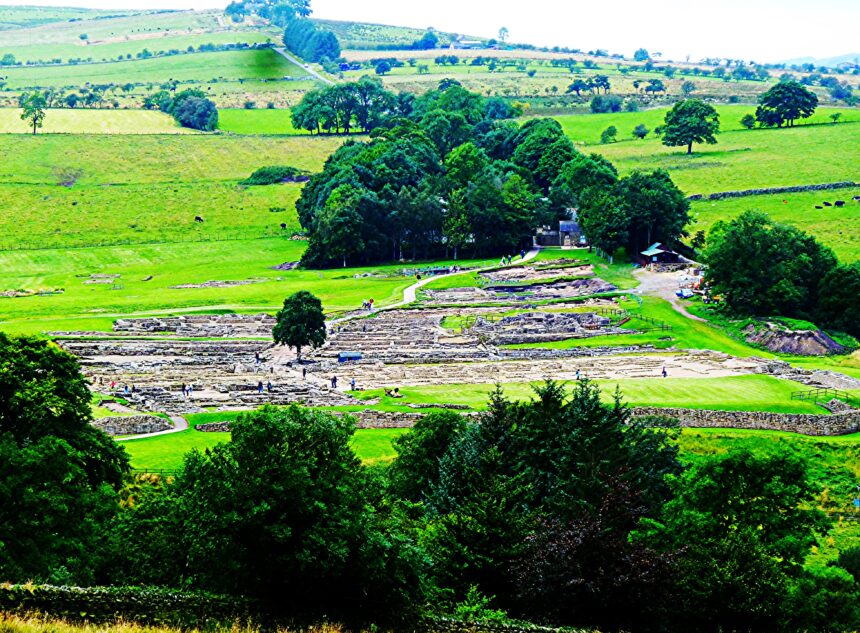
Landscape view of site from 2012. Since subsequently expanded.
Information on Vindolanda: Part 1
Preamble: Weather was dry with little wind and modest temperatures. Offset against these positives was thick fog which afforded interesting perspectives to some of the images.
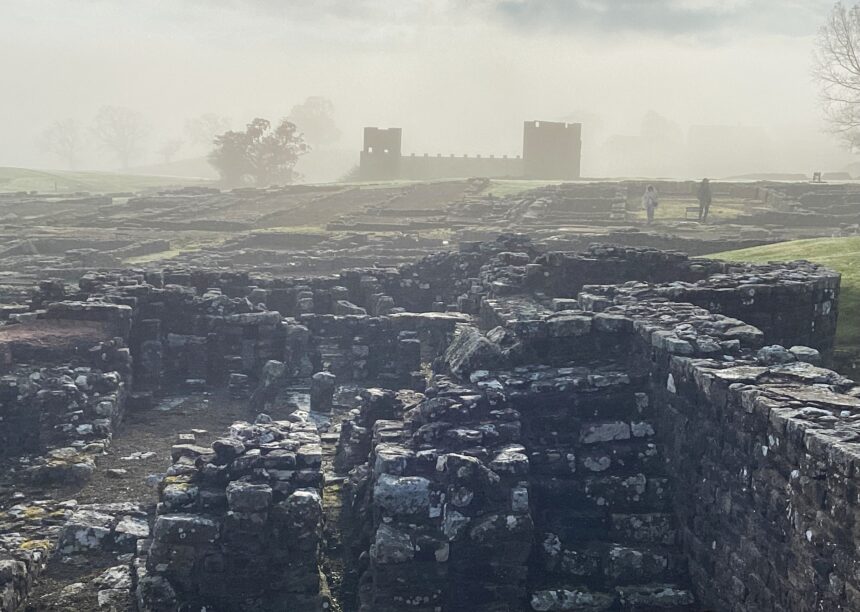
‘Spooky’ view across site due to fog. The castle type building in distance is a 1970s replica of a section of Hadrian’s Wall.There is no evidence for the castellation feature on Hadrian’s Wall.
Roman invasion of Britain: The invasion of Emperor Claudius landed on the south coast of what is now England in AD43.By AD87 the Romans had reached the line of the Stanegate. This road frontier ran from modern-day Corbridge west to Carlisle and on to the Solway Firth.This entailed a distance exceeding 40 miles.Vindolanda, which dates from around AD85, formed part of this early, open, frontier.
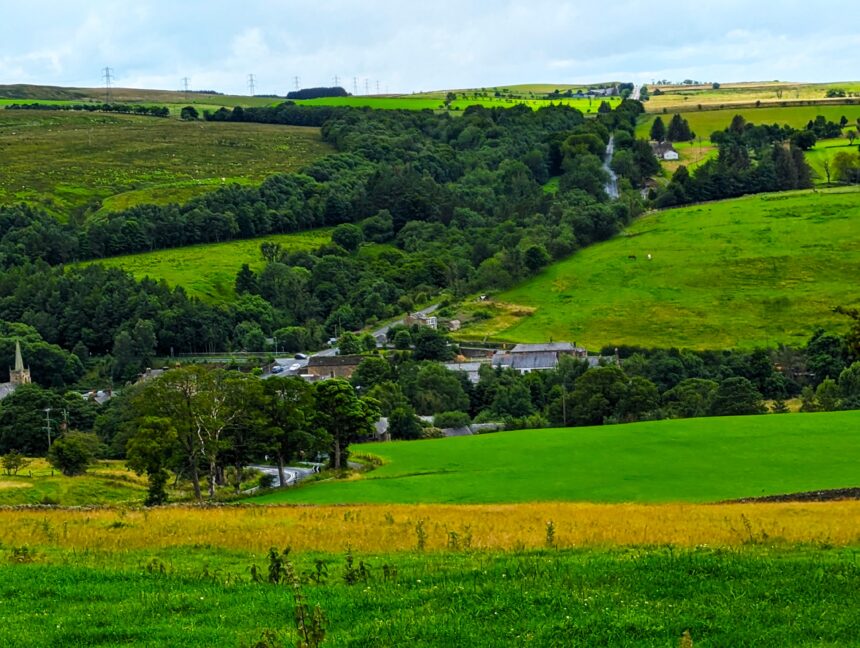
Section of the Roman Stanegate in the landscape.(Library image.)
Vindolanda Site: The site was well chosen in a dip fed by springs. The Roman engineers constructed an elaborate water feed system. This serviced bath houses, latrines and other requirements of the population of about 400 persons plus animals.
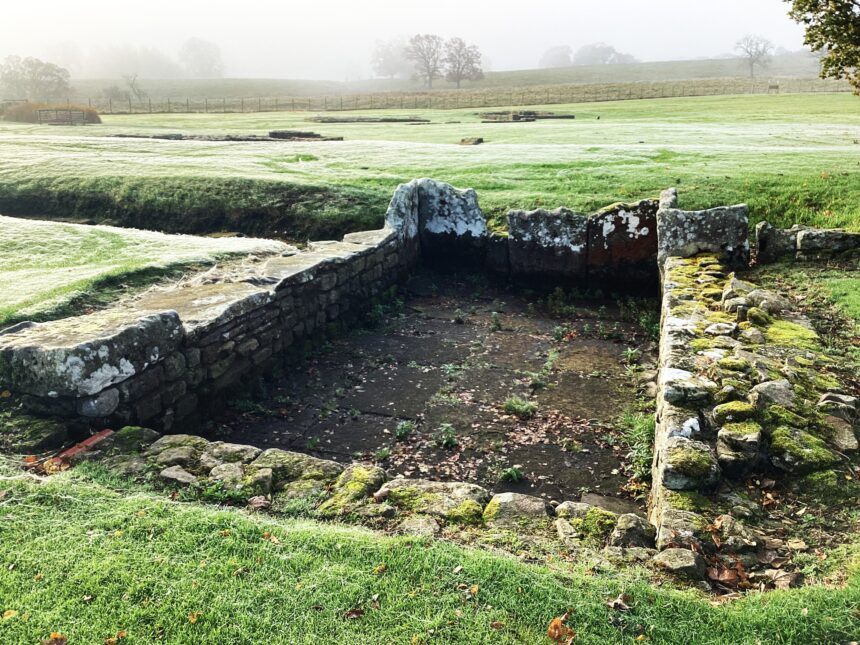
Water hold tank near springs. Due to climate change the water source has diminished considerably in recent years.
Military Contingent: At various times were stationed units from the Netherlands, Belgium, France, and a cavalry unity from Spain.
Information on Vindolanda: Part 2
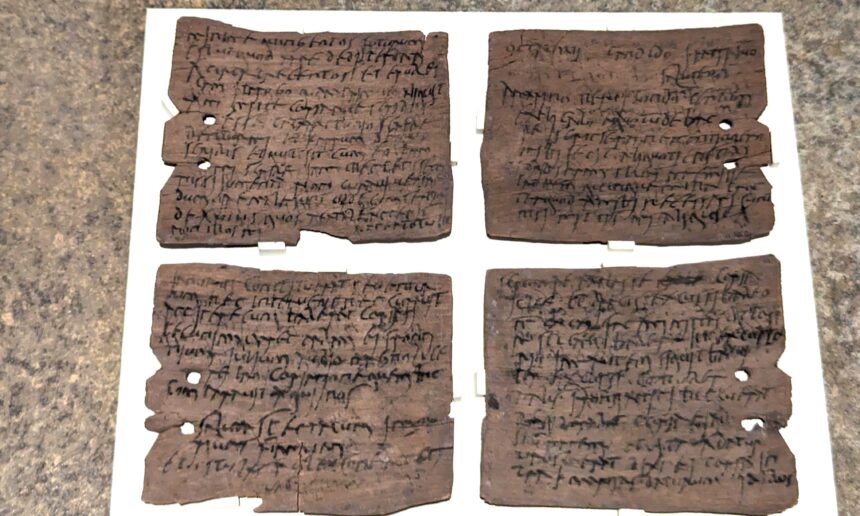
Vindolanda Tablets:This comprises a large number of routine military and private communications from the Roman era.These were written in a Latin script on thin veneers of wood. The tablets date from the mid 120s.Fortunately, the ‘tablets’ were unintentionally preserved. This was due to them being being discarded in a water-logged pit and then secured in resulting anaerobic conditions. These tablets provide an insight into daily life and social conditions. The tablets surprisingly revealed, the presence of women on the frontier.
A small number of the Vindolanda Tablets.
End of Roman Occupation: The Romans abandoned Britain in AD410.Thereafter it is likely that Vindolanda was occupied by ‘squatters’ from the local, native communities. This secondary occupation may have lasted for or a considerable period after the Roman departure.
On-Going Archaeology: The site is dynamic in that it is subject to on-going investigation.So far only 27pct of this extensive site has been excavated. Every year more of the site is revealed.
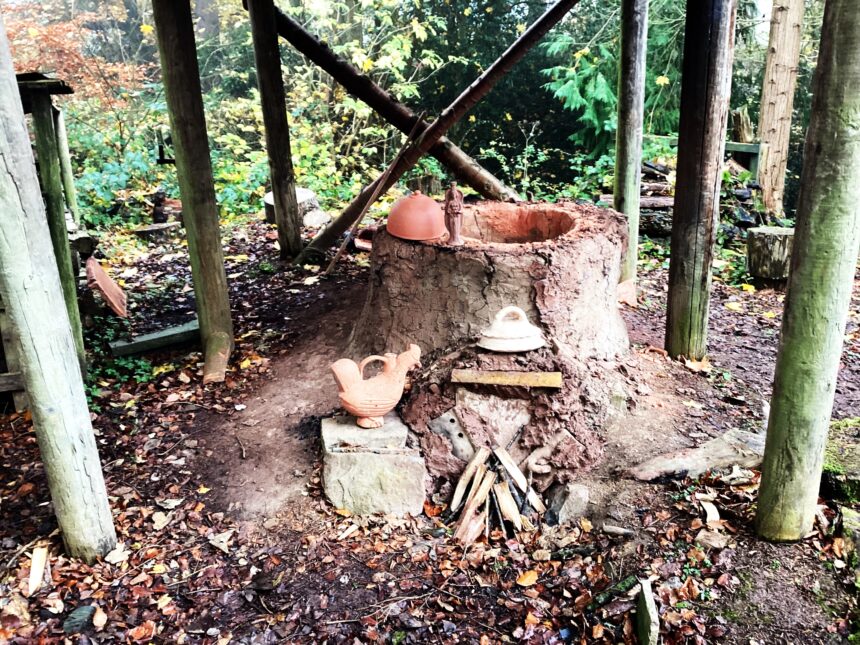
Replica Roiman Pottery Kiln
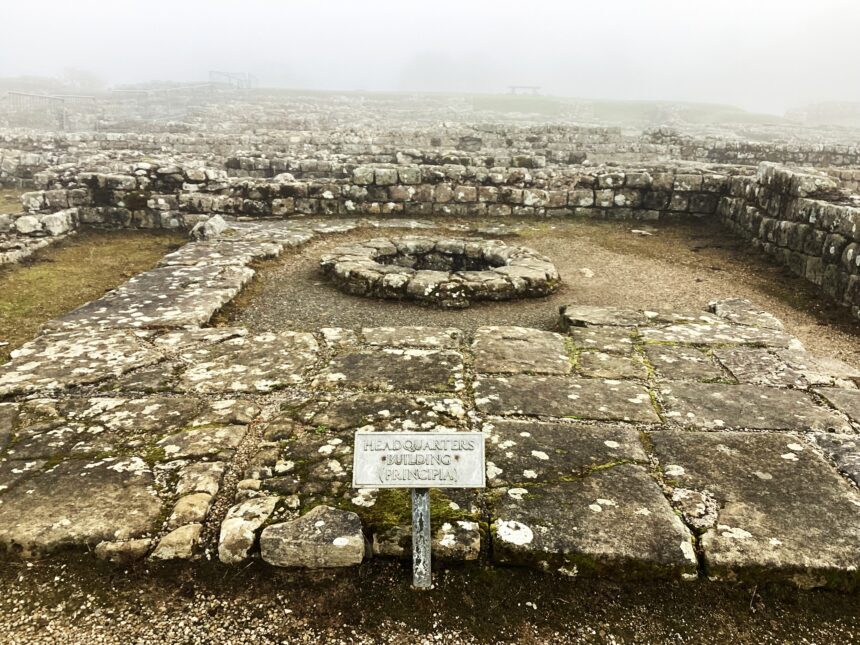
Headquarters Building
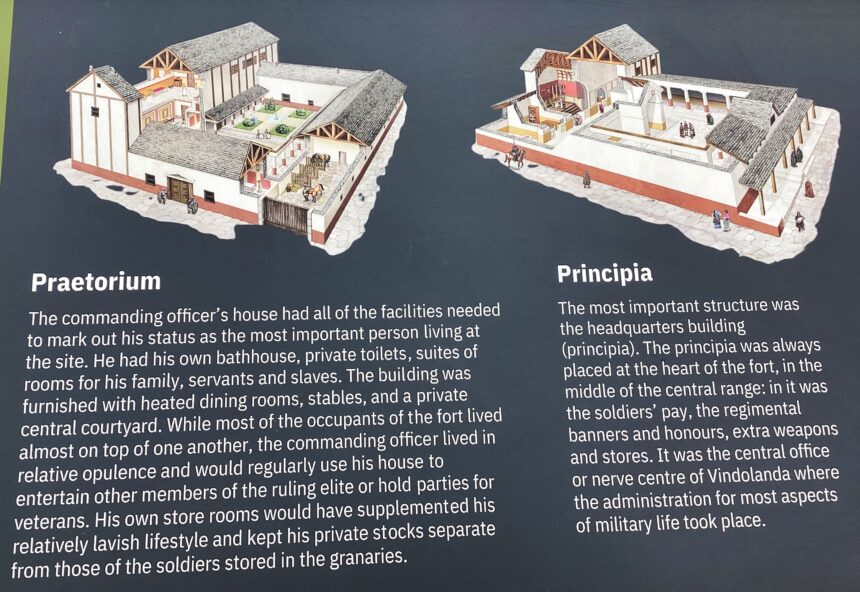
Illustrations of the commanding officer’s house and HQ building.
A 4th century village inside the fort.
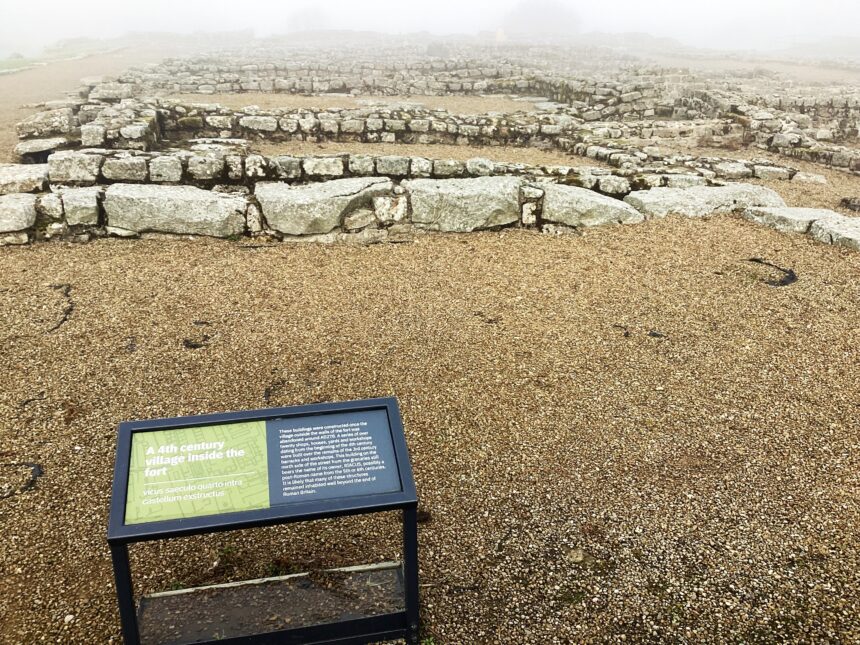
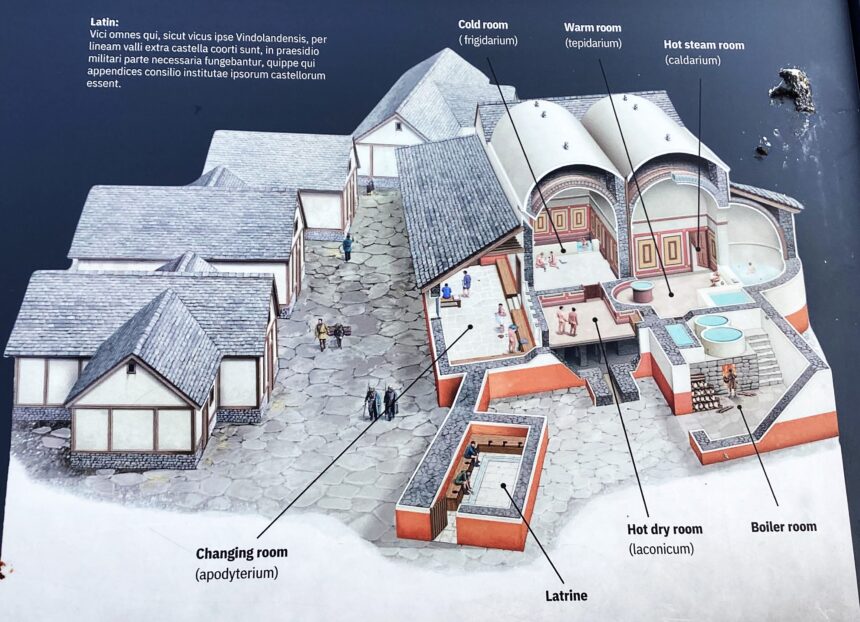
Illustration of Roman Bathhouse.
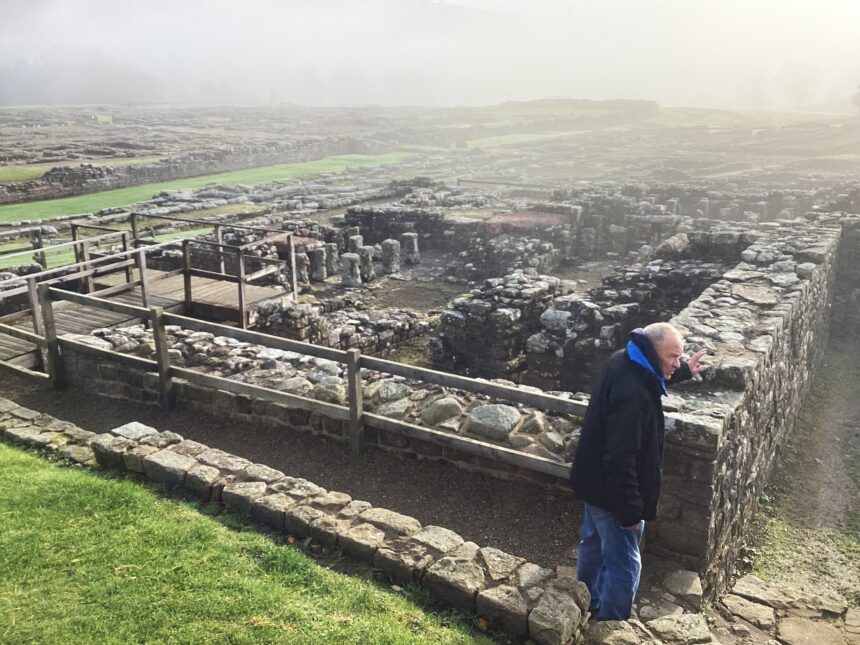
Remains of bathhouse at Vindolanda
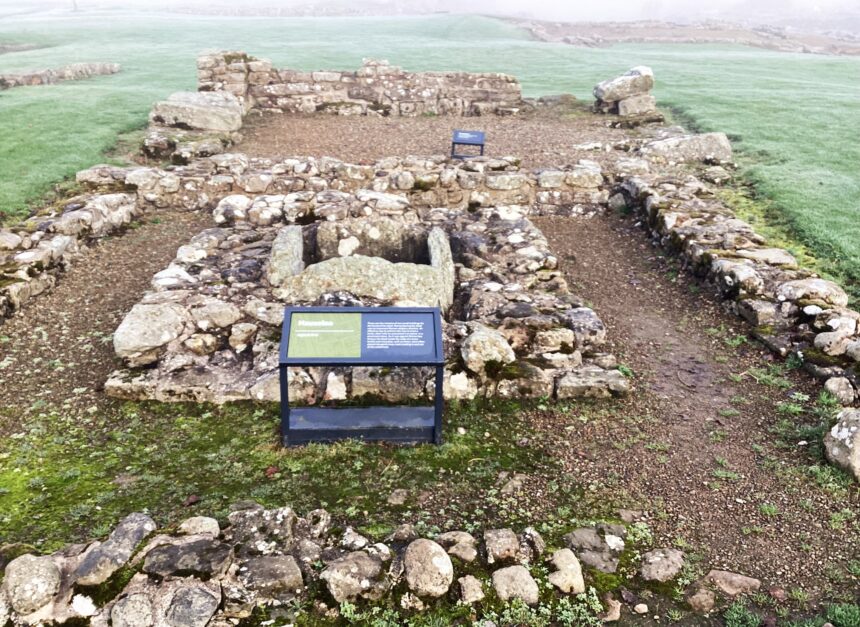
Mausolea
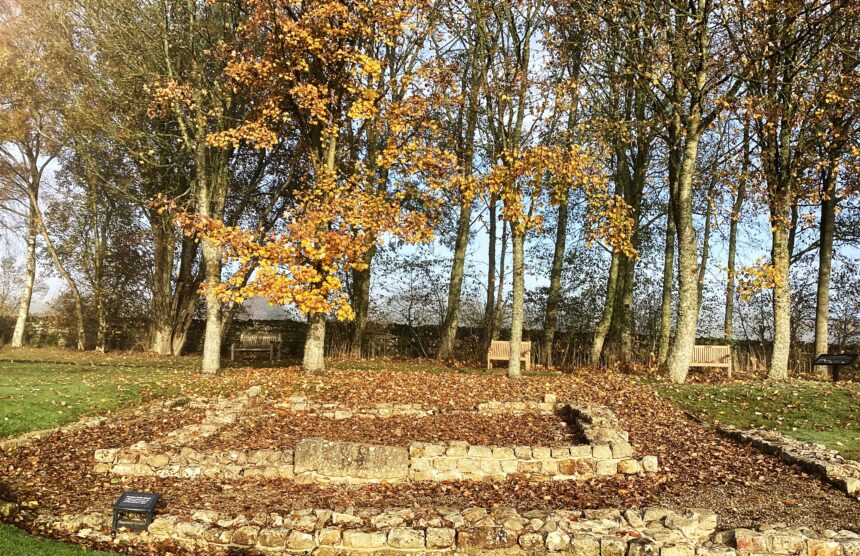
Temple Site
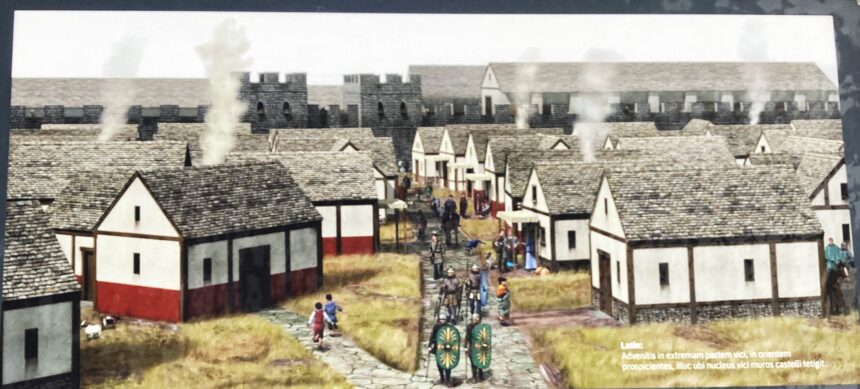
Artist’s impression of civilian settlement (vicus) outside the main fort.
The Vindolanda site includes a cafe, extensive museum and merchandise area. Access by road or local bus with latter connecting with nearby railway stations. Location is about 34 miles west of Newcastle-upon-Tyne and about 28 miles east of Carlisle.
More information for the visitor.
Information on Hadrian’s Wall, the Antonine Wall and Scotland’s history can be found in Visitors’ Guide to Scotland. The ISBN is 978-1-9161332-0-4. This book is also available via Kindle.