
Introduction
This evening, I am focusing on Glasgow’s Merchant City, the historic heart of modern-day Glasgow. It was here, in the 18th century, that a highly profitable tobacco dealing industry developed. This activity was concentrated in the hands of a few ‘Tobacco Barons’ who grew extremely rich.Today, their legacy can be found in the form of street names, architecture and a commercial culture. After the collapse of the tobacco industry Glasgow was well positioned to be at the forefront of the Industrial Revolution. This, in turn generated more wealth and prestige for the city.
More information on the Merchant City
Particular street names indicate the 18th century trading heritage, viz:
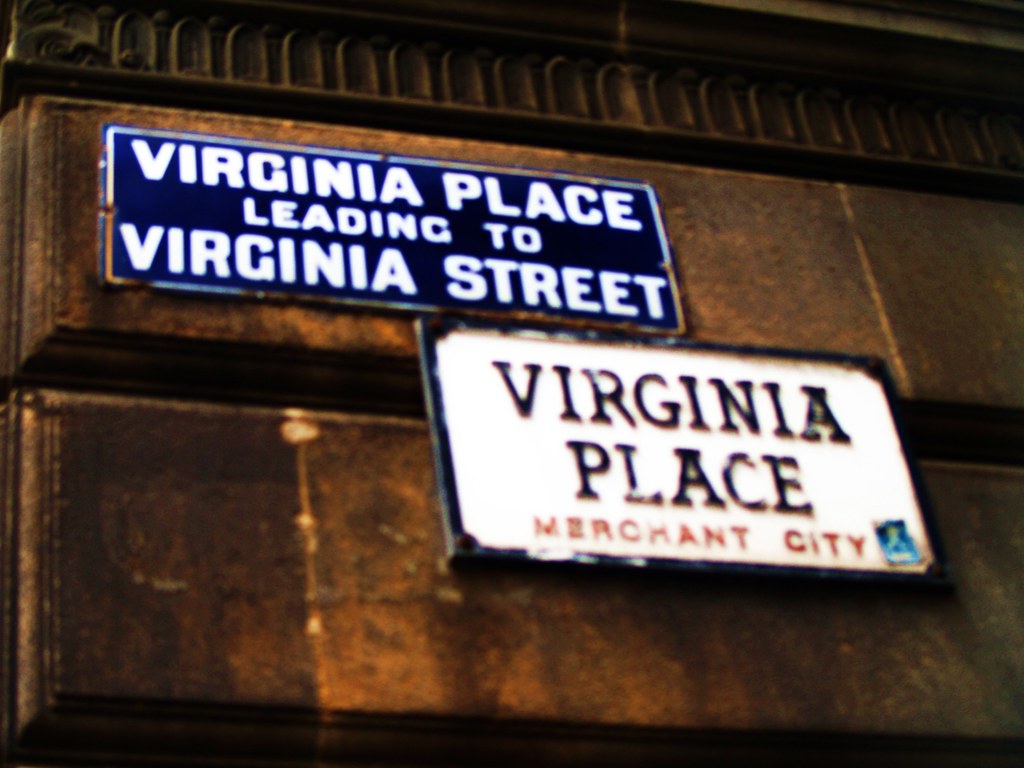
- Virginia Street (Tobacco/Colony/State).
- Jamaica Street (Sugar).
- Glassford Street (John Glassford, a Tobacco Baron)
- Buchanan Street ( Andrew Buchanan, member of a family of Tobacco Barons).
- Dunlop Street (Colin Dunlop, Virginia Merchant and founding partner of the Ship Bank which financed the tobacco industry.)
In the current political climate all of the above are subject to scrutiny owing to reliance on slave labour in former colonies.
Images of the Merchant City
This Gallery of Modern Art building has its origins as a mansion built in 1788 for ‘Tobacco Lord’, Richard Cunninghame.

Glasgow Trades Hall in Glassford Street dates from 1791-1802.
This building is home to The Trades House of Glasgow, established in 1605 and now a registered charity. This entity gives support to the people of the city. All income arising from events held within the building is therefore used to support charitable purposes. The current building was completed in 1794 and generates revenue from weddings and similar functions.

Modern, stylish architecture as manifested in the Italian Centre.


Tobacco Merchant’s House, Miller Street. Built by John Craig in 1775.

The Corinthian building below dates from 1842. It was built on the site of a Tobacco Lord’s mansion. Very impressive interior.


More information
A section on Glasgow and Scotland’s role in the Industrial Revolution can be found in Visitors’ Guide to Scotland. ISBN is 978-1-9161332-0-4. Also available via Kindle.