
Introduction
Tonight, I am focusing the complex and fascinating subject of Isle of Skye geology. This has moulded the spectacular landforms and structures on the island which is a popular visitor destination.
Quiraing, Skye, Scotland

Information on the Geology of Skye-Part 1
Skye displays an incredibly wide range of rocks comprising :
- Igneous (granite, gabbro and volcanic) from the Tertiary Age of 65m to 2.4M years ago.
- Sedimentary (including Jurassic from 135m-205m years ago, Cambrian from 510m-550m years ago.
- Ordovican from 440m – 510m years ago and Precambrian from 550m-3.0bn years ago).
- Metamorphic, comprising Moine and Lewisian Gneiss from the Precambrian age of 550M-3.0bn years ago.
The oldest rocks on Skye are also some of the oldest in Europe, dating back 2.8bn years. These can be found in a strip forming part of the Sleat Peninsula in the south of the island. The ferry port of Armadale forms part of this region.
The Cuillin of Skye is a spectacular mountain range located in the southern central section of the island. Location is just north of Broadford. These are usually split between the Black Cuillin to the south and Red Cuillin to the north. The former are comprised of gabbro and the latter granite. Both comprise the solidified remains of the magma chambers of a volcano from about 60m years ago.The higher parts of the feature have been eroded to leave details of the ‘roots’.
Roots of eroded volcano.

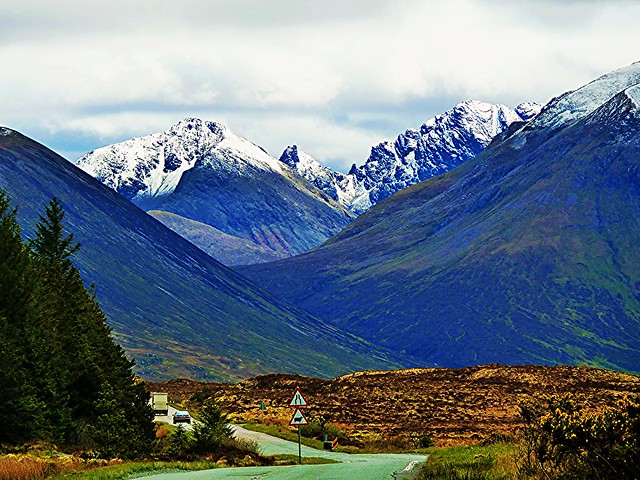
View of Cuillin Mountains, Isle of Skye.

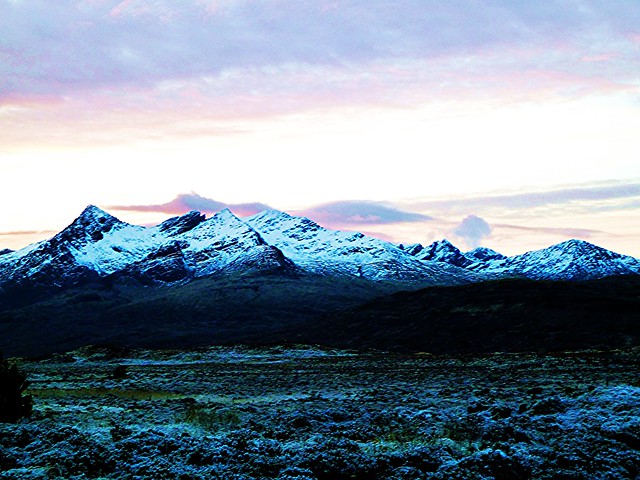
Cuillin Mountains, Isle of Skye


Information on the Geology of Skye-Part 2
The north and west of Skye mainly comprises a stepped landscape formed by horizontal lava flows from the Tertiary Age. This occurred about 60 m years ago. Here can be found flat-topped hills known as MacLeod’s Tables
In the Trotternish area of northern Skye can be found spectacular landslides. These were formed when thick basalt lavas from the Tertiary age flowed on to weaker sedimentary rocks from the Jurassic era. The extra weight caused the latter to give way. This landscape includes the Quiraing, MacLeod’s Table, Needle, Prison, Dun Dubh and the Old Man of Storr.
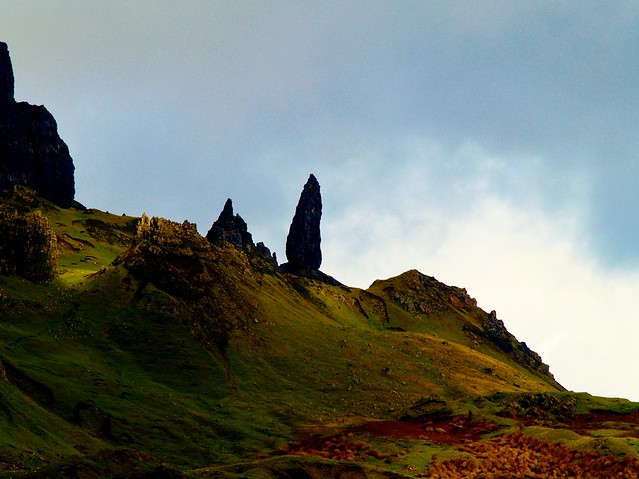
Old Man of Storr, Skye

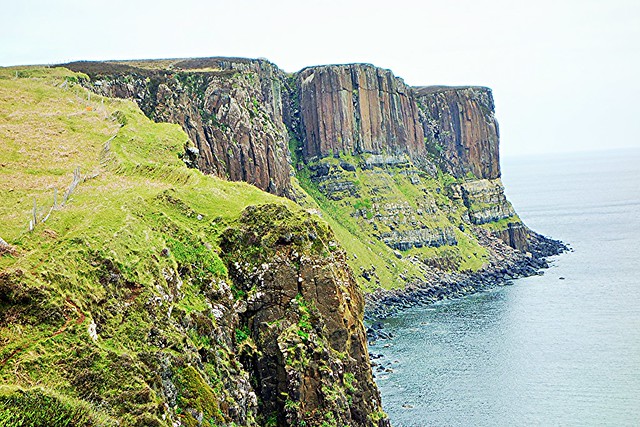
Also in Trotternish can be found Kilt Rock from the Tertiary age. Here. magma has forced its way sideways between layers of sedimentary rock forming extensive sills with well-developed columns.
Kilt Rock, Isle of Skye
Finally, and relatively recent in geological terms, there is Fairy Glen, near Uig. This small, secluded valley is characterised by a concentration of small, cone-shaped hills, pools and rocks. These hills may have been formed by a ‘wind tunnel’ effect at the end of the last ice age, about 11,000 years ago.
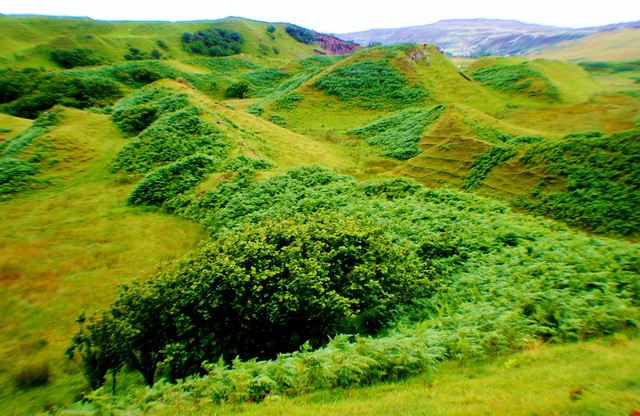
Fairy Glen, Isle of Skye

More information for the Visitor
The publication Visitors’ Guide to Scotland has a section focused on Scotland’s geology. ISBN of the book is 978-1-9161332-0-4. This is also available via Kindle.